
 EN
EN
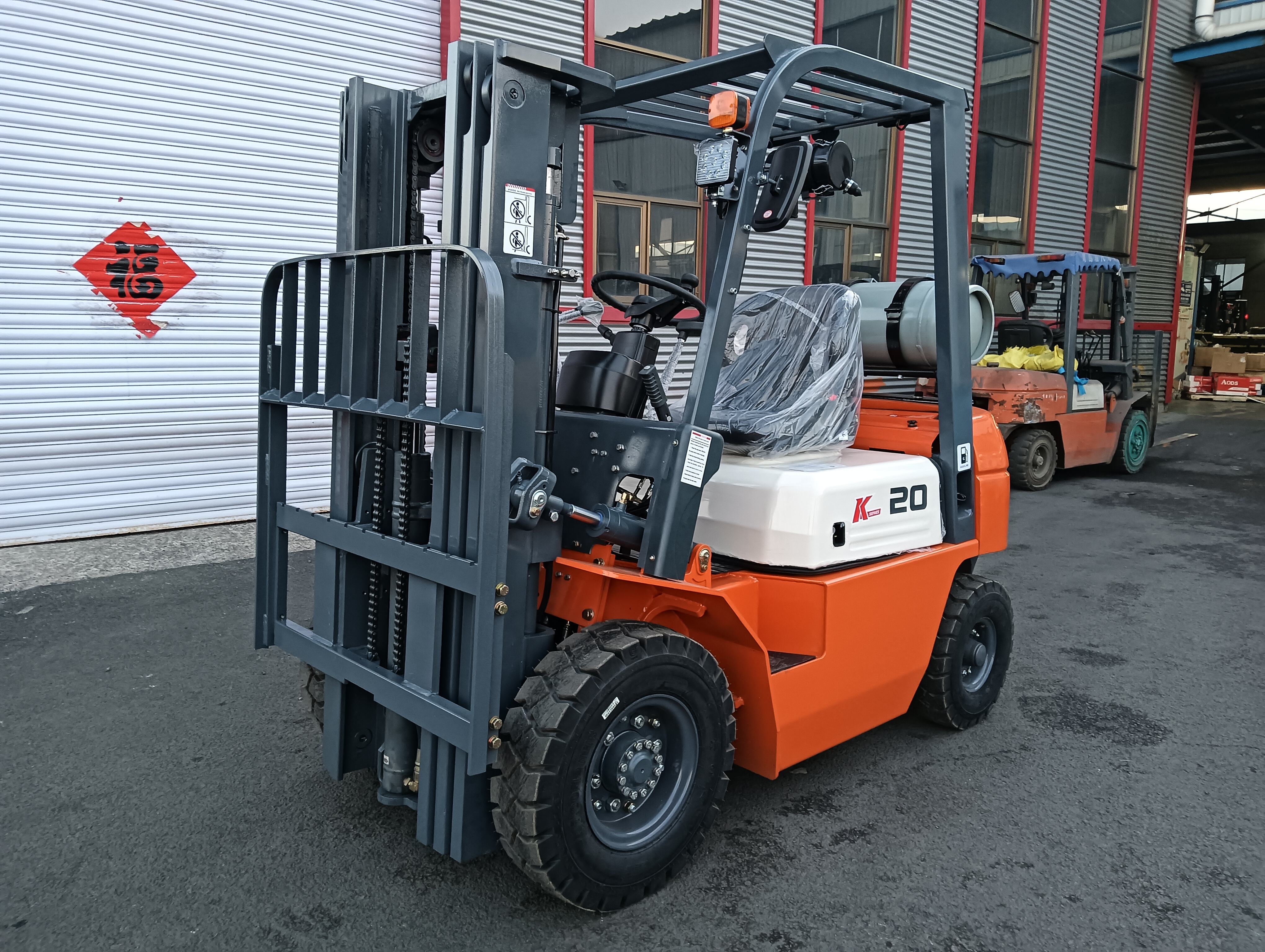
Diesel Forklift Fuel Consumption in Real-World Warehouse Operations
Average Litres per Hour Under Typical Indoor Loading Cycles
Diesel forklifts consume fuel more intensively indoors than outdoors due to stop-start loading cycles—frequent acceleration, short travel distances, and extended idling during staging or positioning. Under typical warehouse conditions, consumption ranges from 2.5 to 4.0 litres per hour, driven primarily by:
- Acceleration intensity: Rapid starts after stops demand high torque, spiking combustion
- Idling frequency: Unproductive engine runtime adds up quickly—1–2 L/hour with no material movement
- Load dynamics: Lifting heavy pallets at height sustains high RPMs longer than horizontal travel
Compared to steady-speed outdoor operation, these indoor patterns increase fuel use by 15–25%. Strategic load path planning and operator awareness are proven levers for reducing waste—without requiring equipment upgrades.
How Warehouse Duty Cycles Differ from Outdoor Use—and Why It Matters for Diesel Forklift Efficiency
Warehouse duty cycles impose unique thermodynamic stress on diesel engines. Unlike outdoor applications—where long-distance travel enables stable RPMs and optimal combustion temperature—indoor workflows force repeated transitions between idle, low-gear maneuvering, and brief high-torque lifts. This disrupts thermal efficiency and promotes incomplete combustion, raising both fuel costs and particulate emissions.
| Factor | Outdoor Impact | Warehouse Impact |
|---|---|---|
| Travel Distance | 100+ meter spans | < 25-meter segments |
| Engine Runtime | 80% active travel | 40% idling/positioning |
| Terrain | Gradual slopes | Frequent elevation changes (racks, dock plates) |
A 2023 logistics benchmark found warehouses using diesel forklifts incurred 22% higher hourly fuel expenses than outdoor operations—compounded by ventilation costs required to manage emissions indoors. Efficiency isn’t optional; it’s a direct cost and compliance factor.
Top 3 Operational and Environmental Factors Impacting Diesel Forklift Efficiency Indoors
Operator Habits: Idling, Acceleration, and Load Handling Techniques
Operator behavior is the single largest controllable variable in diesel forklift fuel use. Excessive idling—during shift handovers, paperwork, or waiting—wastes 1–2 L/hour with zero output. Aggressive acceleration increases combustion cycles by 15–20% versus smooth throttle application. And inefficient load handling—such as unbalanced stacking or unnecessary mast repositioning—adds redundant trips and engine load. Facilities using telematics-guided coaching reduced fuel waste by 12% in 2023 through real-time RPM optimization alerts and post-shift feedback.
Warehouse Layout Constraints: Travel Distance, Racking Density, and Floor Surface
Layout directly shapes forklift energy demand. Every additional 100 meters between loading docks and storage zones raises fuel consumption by 8% in multi-shift environments. High-density racking forces frequent low-gear turns and tight-radius steering—doubling fuel burn relative to open layouts. Uneven or poorly maintained concrete floors add 10–15% rolling resistance, triggering constant throttle corrections. Consolidating high-turnover SKUs near packing stations and standardizing floor finishes deliver measurable, rapid ROI on fuel savings.
Preventive Maintenance Gaps That Reduce Diesel Forklift Combustion Efficiency
Neglected maintenance degrades combustion efficiency faster than most operators realize. A clogged air filter reduces oxygen intake, forcing the engine to burn 18% more fuel for the same output. Worn injectors impair diesel atomization—wasting ~0.3 L/hour per cylinder. Delayed oil changes raise internal friction, cutting torque efficiency by 9%, per 2023 fleet diagnostics. Quarterly diesel particulate filter cleaning and synthetic lubricants preserve peak thermodynamic performance—making maintenance not just reliability-critical, but a core fuel strategy.
Fuel-Saving Technologies Built into Modern Diesel Forklifts
Modern diesel forklifts integrate precision-engineered systems that reduce fuel consumption while preserving power and responsiveness. High-pressure common rail injection delivers ultra-fine diesel atomization, enabling near-complete combustion and up to 30% better fuel utilization, per peer-reviewed combustion studies. Electronic engine management units continuously adapt injection timing and air-fuel ratios to real-time load demands—eliminating energy waste during the partial-load conditions typical of warehouse work.
Turbocharging further enhances efficiency by compressing intake air, allowing smaller-displacement engines to match the output of larger units—reducing baseline fuel draw. Integrated telematics platforms provide live visibility into idle time, throttle patterns, and fuel burn rates—enabling precise, habit-based coaching. Lightweight composite components lower overall mass, decreasing energy required for acceleration and lifting. Together, these innovations let today’s diesel forklifts achieve fuel economy once associated only with electric alternatives—without sacrificing uptime or payload capacity.
Actionable Strategies to Maximize Diesel Forklift Fuel Efficiency in Warehouses
Right-Sizing Fleet Capacity and Matching Diesel Forklift Models to Task Profiles
Fuel waste often begins with mismatched equipment. Oversized forklifts burn excess fuel during light-duty cycles; undersized units overwork engines under load—increasing consumption by up to 18%. Conduct a task audit: log peak lift weights, average travel distances, mast height requirements, and shift durations. For example, facilities with frequent sub-3,000-lb moves across short zones gain 22% efficiency switching from large counterbalance models to compact diesel units optimized for agility—not brute force.
Targeted Operator Training and Data-Driven Telematics Feedback Loops
Operator habits drive up to 40% of fuel variance across fleets. Excessive idling alone can inflate consumption by 30%; aggressive warm-ups and throttle “pumping” compound inefficiency. Implement certified training focused on RPM discipline, load stabilization, and predictive braking. Pair instruction with IoT telematics to track idle time (%), fuel-per-lift, and acceleration events—then close the loop with personalized, biweekly coaching. Facilities applying this approach consistently cut diesel forklift fuel use by 12–15% within six months, verified by third-party fleet analytics.
FAQ
What is the average diesel forklift fuel consumption during typical indoor operations? Diesel forklifts typically consume 2.5 to 4.0 litres per hour in indoor warehouse conditions.
How do operator habits affect diesel forklift efficiency? Operator habits such as excessive idling, aggressive acceleration, and inefficient load handling can significantly increase fuel consumption—by as much as 30% in certain cases.
Why is fuel consumption higher in warehouses compared to outdoor environments? Indoor warehouse operations involve frequent idling, short travel distances, and repeated transitions between low-gear maneuvering and high-torque lifts, which disrupt thermal efficiency and promote higher fuel consumption compared to steady-speed outdoor operations.
What are some actionable strategies to reduce diesel forklift fuel consumption? Strategies include optimizing warehouse layouts, implementing regular preventive maintenance, offering targeted operator training, utilizing telematics for feedback, and matching forklift models to specific task profiles.
What modern technologies help improve diesel forklift fuel efficiency? Technologies like high-pressure common rail injection, electronic engine management systems, telematics tracking, turbocharging, and lightweight components are built into modern diesel forklifts to enhance fuel efficiency and reduce waste.