
 EN
EN
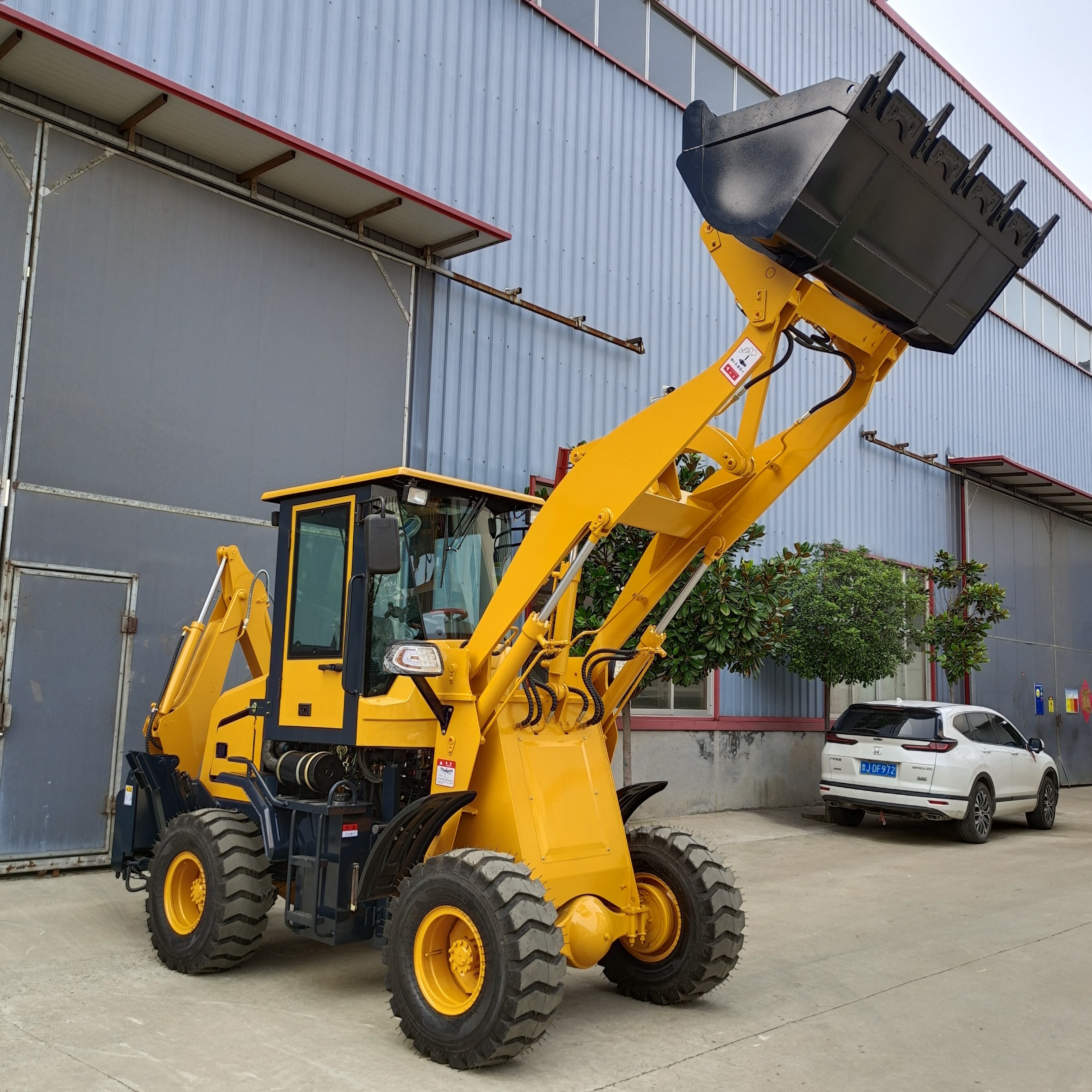
Dual-Function Design: How Backhoe Loaders Integrate Digging and Loading in One Machine
Hydraulic System Architecture Enabling Independent Yet Coordinated Operation
The backhoe loader’s dual functionality hinges on a purpose-built hydraulic system featuring separate, dedicated circuits for the front loader and rear backhoe arm. This design enables truly independent—yet fully coordinated—operation: digging and loading can occur simultaneously without performance trade-offs or hydraulic interference. Stabilizing legs deploy automatically during high-force excavation to anchor the machine and distribute up to 17,000 lb of reaction force evenly across uneven terrain. A centrally located operator cab with a swiveling seat allows seamless visual and physical transition between front and rear controls—eliminating repositioning delays and reinforcing real-time workflow continuity.
Real-World Validation: Municipal Utility Project Completing Trenching and Backfill Loading with a Single Backhoe Loader
A recent urban utility upgrade in Portland, OR, demonstrated this integration under real-world constraints: crews replaced aging water mains using only one backhoe loader. The machine performed rear-arm trenching while simultaneously loading spoil and backfill material with its front bucket—no equipment swaps, no idle time. As a result, pipe installation and site restoration were completed 30% faster than comparable projects using separate excavators and wheel loaders. The single-machine approach also reduced traffic disruption, minimized permitting complexity, and maintained strict OSHA-compliant safety margins around active work zones—validating the operational coherence enabled by unified hydraulic coordination.
Mechanical Integration: Front Loader and Rear Backhoe Arm on a Unified Chassis
The backhoe loader achieves functional duality through a robust, integrated chassis engineered to host two distinct yet complementary systems. At the front, a hydraulic loader delivers precise material handling—scooping, lifting, and transporting debris or aggregate with typical capacities of 1–2 cubic yards. At the rear, a pivoting backhoe arm mounted on stabilized rails provides 180–200° of rotation, enabling accurate excavation without relocating the entire machine. Hydraulic stabilizers extend during digging to lock the chassis and prevent tipping, even on slopes or soft subgrades. Optional center-pivot or side-shift mounting configurations further enhance spatial adaptability—critical in alleyways, utility corridors, and residential developments where traditional excavators lack clearance. Equipment utilization studies confirm that this mechanical synergy delivers up to 40% faster project completion versus deploying separate machines.
Operational Versatility: Optimizing Backhoe Loader Use Across Small-Scale Construction Projects
Backhoe loaders excel where space, budget, and task variety converge—particularly in residential development, municipal infrastructure, and utility maintenance. Their compact footprint, wheeled mobility, and articulated steering allow safe, precise operation within narrow rights-of-way, near existing structures, and on finished surfaces like sidewalks or paved roads. This agility translates directly into reduced setup time, fewer site modifications, and lower risk of collateral damage—key advantages for small-scale contractors managing tight deadlines and lean crews.
Space-Efficient Deployment in Urban and Confined Job Sites
In dense urban environments, the backhoe loader replaces three or more specialized units: a mini-excavator for trenching, a skid steer for cleanup, and a wheel loader for hauling. Its ability to perform trenching, loading, grading, and backfilling within a single footprint eliminates the need for multiple machine staging areas—reducing congestion, noise, and community impact. Balanced weight distribution and low ground pressure ensure stable operation on sensitive surfaces, while 360° visibility from the cab supports safe maneuvering near pedestrians, utilities, and overhead obstructions.
Task Sequencing Strategies to Maximize Productivity Without Equipment Swapping
Productivity gains stem not just from hardware integration but from intelligent workflow design. Operators maximize efficiency by sequencing tasks in logical progression—for example, excavating a trench, stockpiling spoil adjacent to the cut, then immediately loading and redistributing material for backfill. This eliminates transit time, fuel waste, and labor downtime associated with switching machines. Field data from contractor surveys shows such sequencing reduces total cycle time by 25–30% on utility and drainage projects—and cuts fuel use and labor hours proportionally. It’s a practical application of the machine’s core strength: doing more with less, without compromising control or safety.
Comparative Advantages of Backhoe Loaders vs. Specialized Excavators or Wheel Loaders
Backhoe loaders deliver unmatched versatility by consolidating excavation and material handling into one compact, wheeled platform—making them the default choice for contractors managing diverse, small-to-midsize projects where flexibility outweighs extreme specialization. Unlike tracked excavators (optimized for deep, heavy digging) or large wheel loaders (designed for bulk haulage), backhoe loaders prioritize rapid task alternation, minimal setup, and urban mobility. Operating a single unit instead of renting or mobilizing separate machines reduces fuel consumption by up to 40%, cuts rental costs significantly, and lowers crew requirements—validated by Construction Equipment Analysis 2023.
| Advantage Factor | Backhoe Loader | Specialized Equipment |
|---|---|---|
| Multitasking Capability | Digging + loading | Single-function focus |
| Maneuverability | Superior in tight spaces | Limited by size/tracks |
| Operational Cost Efficiency | 30–40% lower | Higher cumulative expenses |
| Setup Flexibility | Immediate task-switching | Requires multiple machines |
For municipal utility repairs—where speed, precision, and minimal disruption are paramount—the backhoe loader’s agility is decisive. As outlined in the Federal Highway Administration’s Utility Relocation Guidelines, rapid transitions between trenching and backfilling accelerate timelines by 25% compared to dual-equipment workflows. That’s not just convenience—it’s measurable ROI in labor, scheduling, and community relations. In short, the backhoe loader isn’t a compromise; it’s a purpose-built solution for the realities of modern small-scale construction.
FAQ
What is the primary advantage of using a backhoe loader?
The primary advantage of a backhoe loader is its dual functionality, combining digging and loading capabilities into one machine. This reduces equipment costs, setup time, and project delays.
How does the hydraulic system in a backhoe loader work?
The hydraulic system in a backhoe loader uses separate dedicated circuits for the loader and backhoe arm, allowing simultaneous and independent operation without interference.
Where are backhoe loaders most effective?
Backhoe loaders are most effective in small-to-midsize construction projects, especially in residential developments, municipal infrastructure, and confined urban job sites.
What cost savings can contractors achieve using a backhoe loader?
Contractors using a backhoe loader can save up to 40% in fuel consumption and significantly reduce rental and labor costs compared to using specialized equipment.
How does a backhoe loader improve productivity on-site?
Backhoe loaders improve productivity by enabling efficient task sequencing, like digging and immediately loading or backfilling, without the need for equipment changes.
Table of Contents
- Dual-Function Design: How Backhoe Loaders Integrate Digging and Loading in One Machine
- Mechanical Integration: Front Loader and Rear Backhoe Arm on a Unified Chassis
- Operational Versatility: Optimizing Backhoe Loader Use Across Small-Scale Construction Projects
- Comparative Advantages of Backhoe Loaders vs. Specialized Excavators or Wheel Loaders
- FAQ