
 EN
EN
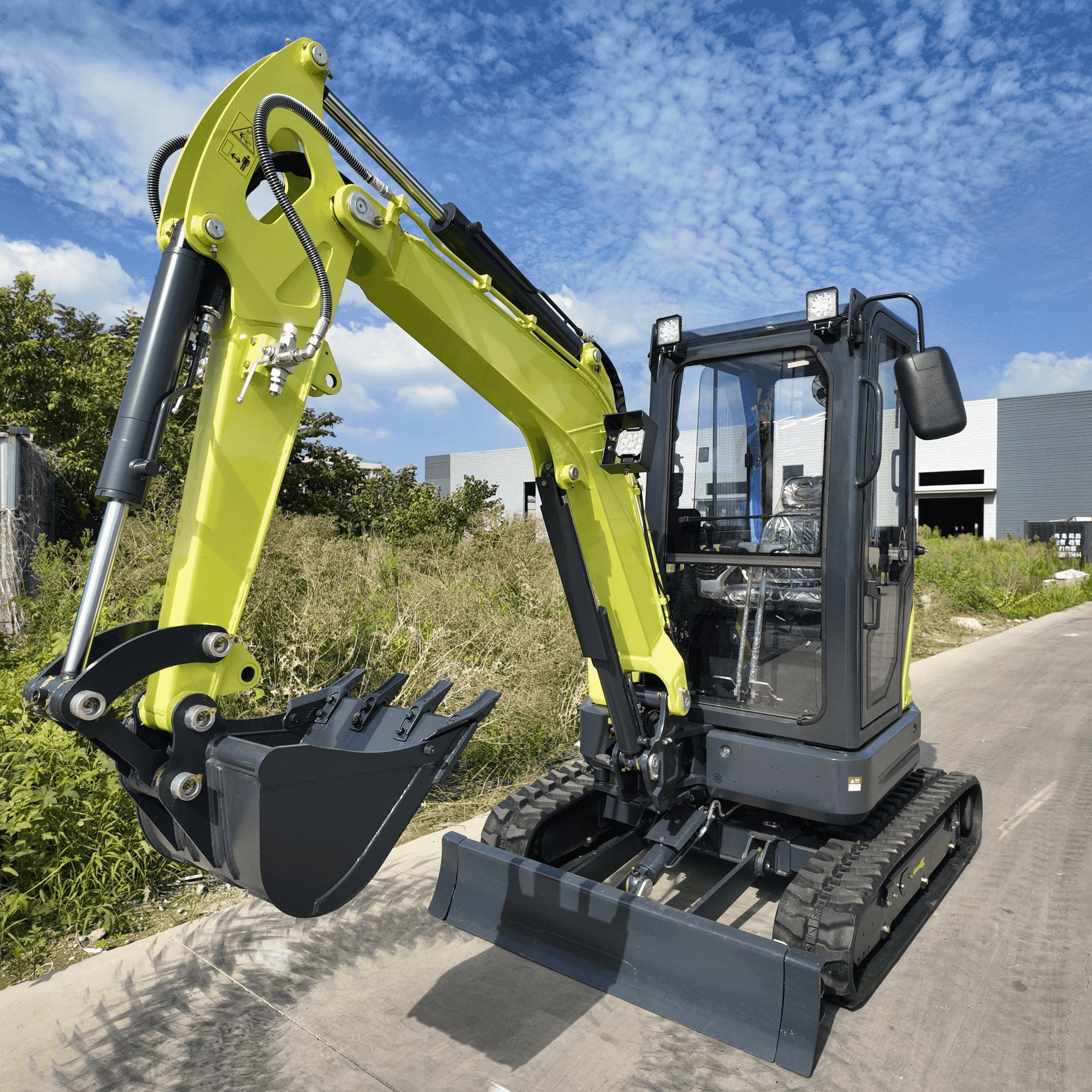
Urban and Confined Site Operations: Where 2 Ton Excavators Excel
Navigating Tight Spaces in Alleys, Backyards, and Narrow Urban Lots
In today's cities, building projects need machinery that packs enough punch but still fits into tight spaces. These little 2 ton excavators are basically miracle workers for urban work sites. They measure around 5 feet wide and weigh less than 3 tons total, so they can squeeze through narrow alleys, backyards, and crowded downtown areas where big rigs just won't go. The small size makes all the difference when working near old pipes or historic buildings foundations. Less chance of knocking something important underground, which means fewer headaches fixing damaged infrastructure after digging starts.
Overcoming Worksite Space Constraints with Zero-Tail-Swing Advantages
The zero tail swing design makes these machines much more efficient when working in tight spots because there's no rear overhang to worry about when turning around. With this setup, operators can actually work right next to walls, fences, even parked cars without having to move the whole machine first. Industry pro David Caldwell has observed something interesting too - his team saw about 28% quicker cycle times in cramped conditions compared to regular excavators. The best part? Safety stays intact while getting more done in those tough to reach areas according to a recent report from ForConstructionPros back in 2024.
Case Study: Utility Upgrades in Downtown Residential Zones
In a recent downtown project, crews replaced gas lines across 12 blocks using 2 ton excavators equipped with trenching attachments. Working within 4-foot easements between century-old row houses, the compact machines avoided structural damage—demonstrating their critical role in sensitive urban environments.
Trend: Rising Demand for Compact 2 Ton Excavators in City Infrastructure
Municipalities now use compact excavators in 63% of urban renewal initiatives, driven by shrinking workspaces and noise regulations. According to the 2024 Urban Equipment Survey, rentals of 2 ton models rose 41% year-over-year for sidewalk repairs and storm drain installations, confirming their status as essential tools in modern city development.
Residential Construction and Foundation Work with Precision
Driveway and Foundation Repair Using 2 Ton Excavator Capabilities
2 ton excavators provide surgical accuracy for driveway repairs and foundation stabilization. Hydraulic-powered buckets remove damaged concrete efficiently while preserving surrounding landscaping. Their ability to rotate 360° within a 6-foot diameter allows precise grading near garages or garden beds without damaging adjacent structures.
Matching Residential Project Scope to the 2 Ton Excavator’s Performance
The average 2 ton excavator comes equipped with around 9.4 horsepower and delivers about 14.8 kilonewtons of digging power, making it suitable for most residential jobs like creating pool basins or building retaining walls. Most contractors can finish standard foundation work within just one or two days when working with these machines, compared to three to four days if doing everything manually. When dealing with holes deeper than four feet or sites where big rocks are present though, many professionals find they need to step up to something heavier, usually between 3.5 and 5 tons, to keep their workflow going without getting stuck on tough spots.
Data Insight: 78% of Residential Contractors Prefer Mini Excavators Under 3 Tons
The 2023 Equipment Optimization Survey found that 78% of residential contractors choose sub-3-ton excavators for foundation work due to their optimal balance of power, transportability, and site adaptability. These machines meet typical depth requirements (3—4 feet) and fit on standard 8—16” trailers, reducing monthly fuel costs by $180—$240 compared to heavier units.
When to Upgrade from a 2 Ton Excavator: Balancing Capacity and Efficiency
While ideal for 90% of residential tasks, 2 ton excavators may fall short for:
- Multi-story foundations needing 5+ foot depths
- High-clay or gravel-heavy soils (>40%)
- Projects requiring over 15 cubic yards dug per day
In such cases, larger models offer 22% faster cycle times, justifying higher operational costs.
Landscaping and Outdoor Living Projects Powered by Compact Equipment
Backyard Applications: Pool Excavation and Outdoor Living Spaces
2 ton excavators reshape yards with minimal disruption, carving pool basins and terraced living areas while protecting existing trees, patios, and gardens. Track-mounted variants reduce ground pressure by 33% compared to wheeled options, preserving delicate turf and hardscapes during operation (2024 Material Flexibility Study).
Commercial and Residential Landscaping Enhanced by 2 Ton Excavator Agility
Landscapers utilize the 90-degree articulated arm and zero-tail-swing design to install retaining walls, grade slopes, and plant mature shrubs close to property lines. Powered by 16.5 HP engines with 7.5 kN digging force, these machines effectively manage clay and rocky soils common in suburban and urban landscapes.
Digging Trenches for Irrigation and Utility Lines in Delicate Terrain
Operators achieve high-precision trenching for PVC pipes and electrical conduits without disturbing root systems or existing irrigation. The machine’s stability on 30-degree slopes and narrow profile allow safe operation in established gardens and protected natural areas, preserving ecological integrity.
Demolition and Indoor Applications Requiring Controlled Power
Controlled demolition tasks using specialized 2 ton excavator attachments
Equipped with hydraulic breakers, concrete crushers, and grapples, 2 ton excavators deliver controlled force for removing brick walls or bathroom fixtures without compromising nearby structures. Their 13—21 HP engines support precision demolition techniques essential for preserving load-bearing elements or historic architectural details.
Maneuverability during partial teardowns in confined indoor environments
Zero-tail-swing models thrive in interior renovations where space limits rotation. A 40” slewing radius enables demolition of kitchen walls or basement partitions in homes with 72” corridors—without constant repositioning. Recent studies show 35% faster debris removal compared to manual methods in enclosed spaces like garages.
Case study: Bathroom expansion in a historic home with zero-tail-swing model
Renovating this charming 1920s Tudor revival house brought some unexpected challenges when workers had to tackle that stubborn 90 square foot concrete slab sitting only 18 inches away from those beautiful original mosaic floors. The team brought in a heavy duty 2 ton excavator equipped with special 14 inch ripper teeth plus a vacuum system to handle all the mess. This setup allowed them to break apart the concrete without creating clouds of dust everywhere. What really made things work smoothly was the machine's zero tail design which kept it from bumping into those precious old wood moldings throughout the job. And as an added bonus, finishing up the whole $58 thousand renovation nine days early meant everyone involved could celebrate getting the historic space back to its former glory without breaking the bank.
Transportation and Operational Advantages of the 2 Ton Excavator
Lightweight design enables easy transport between frequent job site relocations
Weighing approximately 4,400 lbs (2,000 kg), 2 ton excavators can be hauled with standard pickup trucks and tilt-bed trailers—eliminate the need for costly heavy-haul rigs. This reduces transport fees by $450—$750 per day and allows rapid movement between sites, especially valuable for contractors managing multiple small-scale jobs daily.
Reduced logistics costs due to lower trailer and fuel requirements
These excavators consume 3—5 gallons of diesel per hour, 33—40% less than 5 ton models. Transport efficiency is equally improved: lighter trailers achieve 6—8 MPG versus 2—3 MPG for low-beds, experience 10% slower tire wear, and require only 15—20 minutes of setup time—significantly less than the 45+ minutes needed for larger machines.
Time savings from quick setup and deployment on small-scale projects
Contractors report completing residential and urban tasks 22% faster with 2 ton excavators due to immediate deployability. Without permit requirements or complex assembly, crews can transition between 3—4 sites in a single day—a level of agility unattainable with heavier equipment reliant on scheduled hauling and extended setup.
FAQ
What are the benefits of using a 2 ton excavator in urban construction sites?
2 ton excavators are ideal for urban construction sites due to their compact size, allowing them to fit into tight spaces and navigate narrow alleys without causing damage to surrounding structures. Their zero-tail-swing design enhances operational efficiency and safety.
Are 2 ton excavators suitable for residential construction projects?
Yes, 2 ton excavators excel in residential construction projects, offering precision for driveway repairs, foundation stabilization, and pool excavation while minimizing disruption to existing landscaping and structures.
How do 2 ton excavators contribute to landscaping and outdoor projects?
2 ton excavators are agile and versatile, capable of reshaping yards for pool basins, terraced living spaces, and installing retaining walls. Their track-mounted variants preserve turf and hardscapes during operations.
When should contractors consider upgrading from a 2 ton excavator?
Contractors may need to upgrade from a 2 ton excavator for multi-story foundations, high-clay or gravel-heavy soils, and projects requiring extensive excavation beyond 15 cubic yards per day.
Table of Contents
- Urban and Confined Site Operations: Where 2 Ton Excavators Excel
- Residential Construction and Foundation Work with Precision
- Landscaping and Outdoor Living Projects Powered by Compact Equipment
- Demolition and Indoor Applications Requiring Controlled Power
- Transportation and Operational Advantages of the 2 Ton Excavator