
 EN
EN
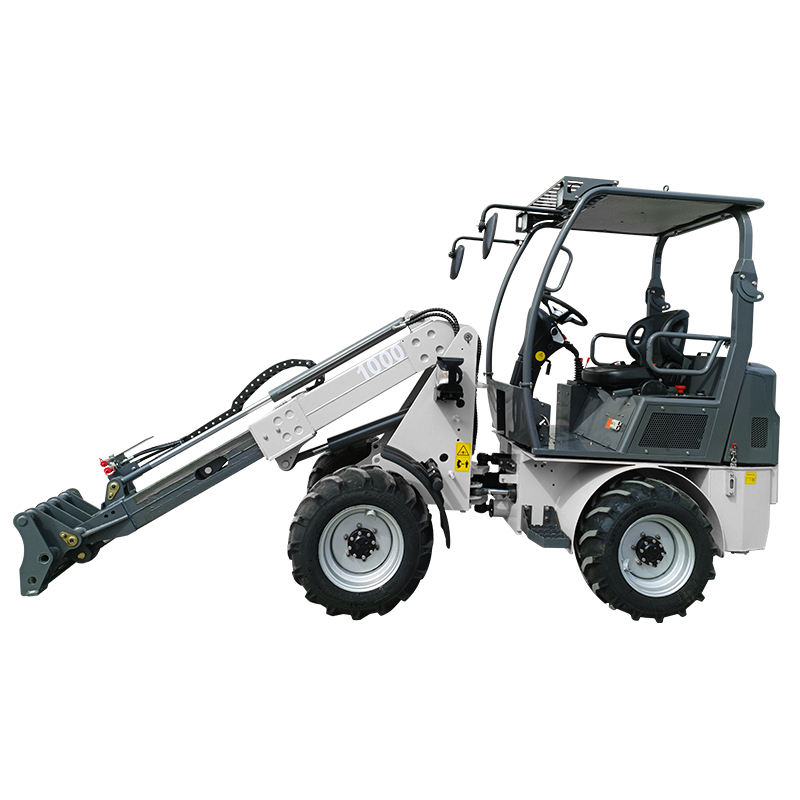
Top 3 Industry Applications of the Telescopic Loader
Construction: High-Reach Placement, Confined-Site Maneuverability, and Crane-Like Flexibility
Telescopic loaders thrive in construction environments where space is tight but vertical reach is essential. Their telescopic boom delivers crane-like lifting—up to 50+ feet—without requiring dedicated crane setup or ground support. This makes them ideal for placing steel beams, positioning rooftop HVAC units, or installing façade panels on urban infill sites. Compact dimensions and all-wheel steering allow navigation through narrow corridors and congested staging areas where cranes or standard forklifts cannot operate. Unlike conventional lift trucks, telescopic handlers maintain rated capacity across their full extension range—a critical advantage when handling concrete forms or precast elements at height. Precision hydraulic controls enable millimeter-accurate placement, even with irregular or oversized loads. By consolidating functions once requiring multiple machines, they reduce equipment rental costs, site congestion, and scheduling dependencies.
Agriculture: Silage Handling, Bale Transport, and Multi-Task Barn-to-Field Operations
In agriculture, telescopic loaders function as true multi-role platforms across seasonal workflows. Hydraulic power and high-lift capability support efficient silage moving during feeding cycles, with specialized grabs handling up to 3 tons per lift. During harvest, they transport round or square hay bales—often exceeding 2,000 lbs—directly from field to barn or silo, eliminating manual labor and reducing spoilage. The fully enclosed, ROPS/FOPS-certified cab protects operators from dust, weather, and debris during extended shifts. Quick-attach compatibility enables seamless transitions between bale spikes, pallet forks, manure buckets, and feed dispensers—all in under two minutes. Four-wheel drive and robust suspension ensure reliable traction across muddy pastures, sloped paddocks, and uneven barnyards where conventional forklifts lack stability. This adaptability reduces capital outlay and maintenance overhead by replacing several single-purpose machines.
Warehousing & Utilities: Vertical Pallet Stacking, Loading Dock Efficiency, and Elevated Infrastructure Access
Warehouses deploy telescopic loaders to unlock high-density vertical storage—safely placing pallets in racking systems over 40 feet tall, double the reach of standard counterbalanced forklifts. At loading docks, their forward-reach capability allows operators to unload trailers without entering confined trailer spaces, improving both safety compliance and throughput. Utility crews rely on integrated platform attachments to access overhead power lines, fiber-optic conduits, and telecom infrastructure—replacing scaffolding or bucket trucks in many mid-height applications. Non-marking tires preserve polished concrete or epoxy flooring in distribution centers, while real-time load moment indicators prevent tip-overs during high-reach stacking. For cold storage facilities, purpose-built models maintain hydraulic responsiveness and operator comfort in sub-zero conditions—where standard equipment risks fluid gelling or control lag.
Critical Performance Features of a Telescopic Loader
Telescopic Boom Engineering: Optimizing Reach, Lift Capacity, and Hydraulic Response
The telescopic boom defines the machine’s functional envelope—enabling simultaneous vertical lift and forward extension beyond the reach of conventional lift trucks. Key engineering parameters include:
- Rated Operating Capacity (ROC): The maximum safe load at a given outreach, calculated per ISO 15870:2023 standards as 50% of tipping load under defined test conditions. ROC declines predictably with extension, making accurate load charts essential for safe operation.
- Vertical Lift Path: Machines engineered with this path maintain consistent bucket or attachment height throughout the lift cycle—from ground level to maximum height—improving dump angles, material control, and placement accuracy compared to radial lift designs.
- Hydraulic Efficiency: High-pressure systems (typically 300–350 bar), paired with load-sensing pumps and proportional valve control, deliver responsive, smooth, and energy-efficient boom movement. This precision is vital for coordinated lift-and-extend tasks, such as placing structural components on elevated slabs.
Stability Systems: All-Terrain Mobility, Outrigger Integration, and Real-Time Load Moment Monitoring
Stability is non-negotiable when lifting heavy loads at extended reach—especially on uneven or unprepared surfaces. Modern telescopic loaders integrate layered safeguards:
- All-Terrain Chassis: Heavy-duty drivetrains, hydrostatic transmissions, and adaptive suspension systems provide traction and control across mud, gravel, and graded earth—critical for agricultural and construction use.
- Steering Modes: Configurable steering enhances situational adaptability:
| Steering Mode | Primary Benefit | Ideal Use Case |
|---|---|---|
| Four-Wheel | Tightest possible turning radius | Urban job sites, tight staging zones |
| Crab Steering | Diagonal machine translation | Precise alignment in narrow corridors |
| Front-Wheel Only | Enhanced straight-line stability at speed or on inclines | Inter-site transport on paved roads |
- Load Moment Monitors (LMM): These certified safety systems continuously calculate load weight, outreach, and center-of-gravity position in real time. Visual and audible alerts warn operators before reaching unsafe thresholds—significantly reducing tipping incidents and supporting OSHA-compliant operation.
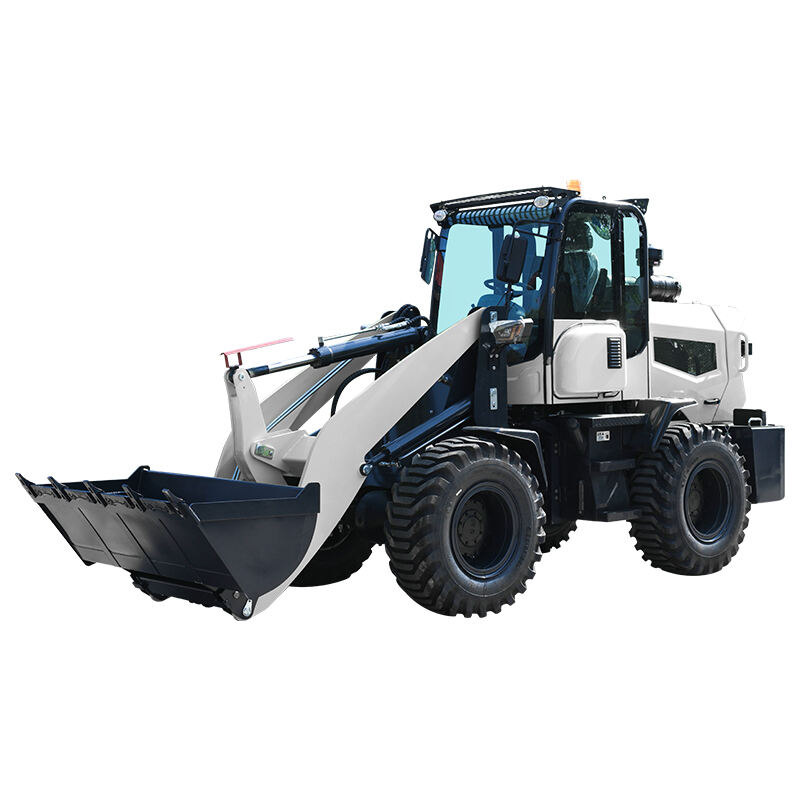
Attachment Versatility: Maximizing Telescopic Loader ROI Across Tasks
The telescopic loader’s quick-attach system transforms it from a single-purpose tool into a mission-adaptive platform. Operators switch between forks, buckets, bale spikes, grapples, and personnel platforms in under two minutes—without tools or hydraulic disconnects. This eliminates the need for multiple dedicated machines on site, cutting capital expenditure, training complexity, and maintenance overhead. For example, the same unit can move soil in the morning, handle palletized feed in the afternoon, and dispense silage at dusk—maximizing daily utilization. Hydraulic compatibility ensures consistent, responsive control across all attachments, preserving efficiency and minimizing wear on the carrier machine. Strategic selection of high-duty-cycle attachments—matched to core operational needs—drives measurable improvements in cycle time, cost-per-ton metrics, and overall equipment effectiveness (OEE).