
 EN
EN
Match Skid Steer Loader Size and Frame Class to Project Requirements
Small, Medium, and Large Frame Categories: ROC Ranges and Typical Construction Applications
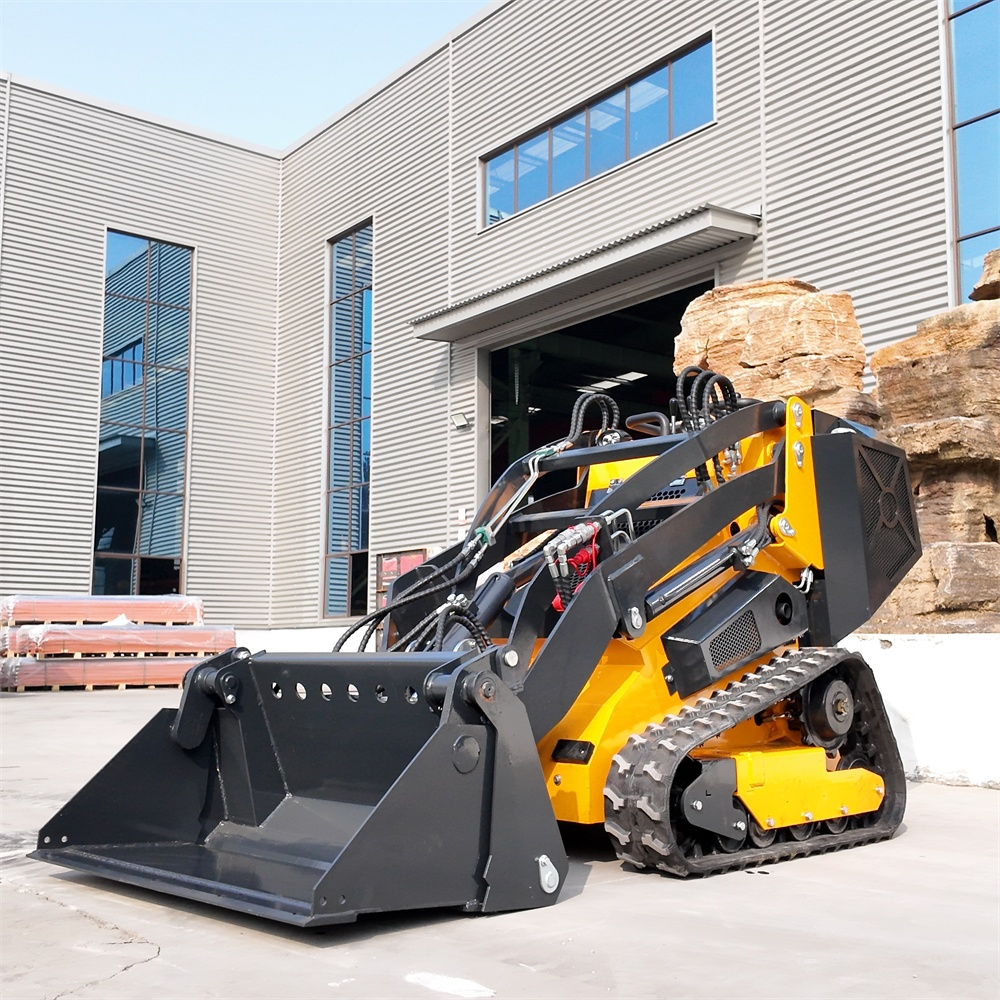
Rated operating capacity (ROC) defines the maximum load a skid steer loader can safely handle at its bucket’s centerline. Small-frame units range from 1,000 to 1,750 lbs ROC, delivering 50–70 hp and weighing 3,000–5,000 lbs—ideal for landscaping, light construction, and snow removal in congested or space-constrained areas. Their compact footprint and fuel efficiency make them especially effective on small lots and residential sites.
Medium-frame machines offer 1,750–2,200 lbs ROC with 70–90 hp and operate at 5,000–8,500 lbs. They strike a practical balance of power, reach, and maneuverability for grading, material handling, and mid-size commercial or infrastructure projects.
Large-frame models exceed 2,200 lbs ROC—some reach up to 4,000 lbs—with 90–110 hp and operating weights of 8,500–11,000 lbs. Built for high-demand applications like demolition, heavy lifting, and large-scale site prep, they deliver greater stability and attachment versatility—but require more robust transport logistics and higher operating costs.
| Frame Class | ROC (lbs) | Horsepower | Operating Weight (lbs) | Best Applications |
|---|---|---|---|---|
| Small | 1,000–1,750 | 50–70 | 3,000–5,000 | Landscaping, tight spaces, snow removal |
| Medium | 1,750–2,200 | 70–90 | 5,000–8,500 | Construction, grading, material handling |
| Large | 2,200–4,000 | 90–110 | 8,500–11,000 | Demolition, heavy lifting, commercial projects |
Matching frame class to project scope ensures safe, efficient operation—and avoids costly mismatches like underpowered equipment causing delays or oversized machines damaging surfaces or inflating ownership costs. Crucially, ROC declines as lift height increases; always evaluate real-world capacity at your typical working height—not just peak specs.
Urban, Residential, and Confined-Site Projects: Prioritizing Compactness and Zero-Turn Maneuverability
In urban corridors, residential backyards, or renovation zones with narrow gates and limited staging space, compactness and zero-turn agility are non-negotiable. Small- and medium-frame skid steers with zero-turn capability rotate within their own footprint, enabling precise repositioning around structures, utility boxes, or existing hardscapes without requiring backing maneuvers. Their short wheelbase and low ground pressure minimize turf compaction and surface damage—critical when working on lawns, pavers, or newly graded soils.
Radial lift paths further support confined-site productivity by offering greater forward reach at mid-height—ideal for loading dump trucks parked close to buildings or placing materials near foundations. For residential renovations, urban utility installations, or alleyway access work, prioritizing compact dimensions and responsive steering prevents costly delays, rework, and neighbor complaints—making maneuverability as vital as raw power.
Choose the Optimal Lift Path and Lifting Performance for Your Site Conditions
Radial vs. Vertical Lift: Impact on Load Height, Forward Reach, and Stability on Uneven or Sloped Terrain
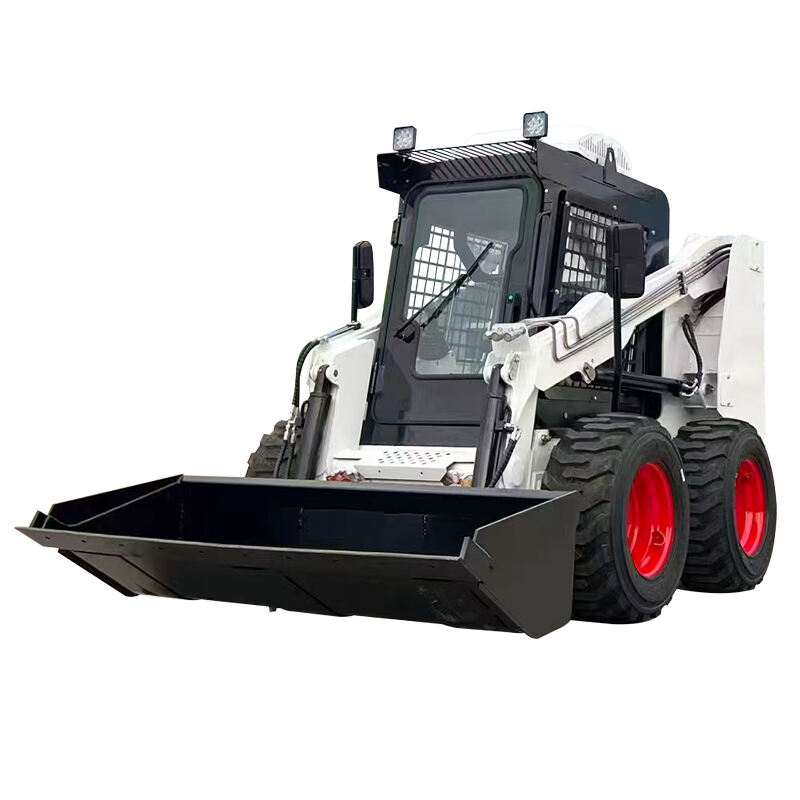
Your lift path choice directly affects how well a skid steer loader performs on elevation-sensitive or terrain-challenging jobs. Vertical lift designs raise the bucket along a near-straight vertical path, keeping the load consistently close to the machine’s center of gravity. This delivers up to 15–20% greater dump height than radial counterparts—making vertical lift ideal for loading tall trailers, stacking pallets onto raised platforms, or placing materials on elevated pads. It also enhances stability on slopes or uneven ground, where load swing and tipping risk are amplified.
Radial lift paths follow a natural arc, extending the bucket farther forward at mid-lift positions. This improves visibility and control during grading, trenching, and digging—especially when working against curbs, retaining walls, or sloped surfaces. While radial loaders maintain strong stability at eye-level heights, their rated capacity drops more steeply as arms approach full extension. As a result, they’re better suited for ground-engagement tasks than high-elevation placement.
- Vertical lift excels when: Dump height, load consistency at full extension, and slope stability are top priorities
- Radial lift excels when: Forward reach at working height, ground contact control, and cost-efficiency matter most
Understanding Rated Operating Capacity (ROC) and Lift Height Curves—Why Real-World Usability Trumps Peak Specs
Rated Operating Capacity (ROC) is not a fixed number—it’s a dynamic value that changes with lift height and load position. Manufacturers publish lift height curves showing how much weight the machine can safely carry at each point in the lift arc. A loader rated at 3,000 lbs ROC may only handle 1,800 lbs at maximum height—a 40% reduction. That’s why relying solely on peak ROC invites overloading, instability, or hydraulic strain.
Machines optimized for material handling prioritize vertical lift geometry and flatter ROC drop-off curves—maintaining usable capacity across more of the lift range. Excavation-focused models often emphasize mid-height strength and radial reach instead. Always cross-reference your typical lift height and load weight with the manufacturer’s curve—not just the headline ROC. In field conditions, predictable control and consistent performance at working height matter far more than theoretical maximums.
Select Wheeled or Track-Driven Skid Steer Loader Based on Ground Conditions and Mobility Needs
Soil Type, Ground Pressure, and Surface Sensitivity: When Compact Track Loaders (CTLs) Deliver Superior Traction and Minimal Disturbance
Ground conditions are the decisive factor between wheeled skid steers and Compact Track Loaders (CTLs). Wheeled models perform best on firm, stable surfaces—like asphalt, concrete, or well-compacted gravel—where their higher travel speeds (up to 12 mph) and lower maintenance needs deliver operational efficiency. But on soft, wet, or uneven terrain—including loam, sand, mud, or recently seeded turf—their concentrated ground pressure causes rutting, sinking, and loss of traction.
CTLs distribute weight over a larger surface area, reducing ground pressure by 40–60% compared to equivalent wheeled units. This enables confident operation on slopes up to 30 degrees, slippery substrates, and ecologically sensitive sites like wetlands, golf courses, or newly landscaped yards. Their enhanced flotation and grip prevent surface damage while maintaining productivity—making CTLs the preferred solution for pipeline installation, erosion control, and environmentally regulated projects. When site protection, all-weather mobility, or terrain adaptability are mission-critical, track-driven performance isn’t just beneficial—it’s essential.
Ensure Attachment Compatibility and Hydraulic Capacity for Core Construction Tasks
Hydraulic Flow, Pressure Ratings, and Quick-Attach Systems: Matching Skid Steer Loader Capabilities to Digging, Grading, and Material Handling Demands
A skid steer loader’s real-world utility hinges on seamless integration with attachments—and that depends on three interdependent factors: hydraulic compatibility, mounting interface, and load capacity limits.
First, verify that the machine’s hydraulic flow rate (GPM) and pressure (PSI) meet or exceed the attachment’s minimum requirements. Under-supplying flow or pressure leads to sluggish response, reduced torque, and premature wear—especially on high-demand tools like cold planers, stump grinders, or high-flow sweepers.
Second, confirm coupler and mounting compatibility. While most modern machines use universal quick-attach systems, some attachments require Pioneer, John Deere, or other proprietary couplers—or adapters to bridge the gap. Mismatched couplers compromise safety and increase downtime.
Third, never exceed the skid steer’s Rated Operating Capacity (ROC)—which includes both the attachment’s weight and the load it carries. Exceeding ROC risks tipping, hydraulic overload, or structural failure. Always consult the operator’s manual for ROC charts specific to your attachment configuration.
Together, these elements ensure reliable, safe, and productive execution of core tasks—from precision grading with a laser-guided blade to high-volume material handling with a high-capacity bucket or pallet fork.
Table of Contents
- Match Skid Steer Loader Size and Frame Class to Project Requirements
- Choose the Optimal Lift Path and Lifting Performance for Your Site Conditions
- Select Wheeled or Track-Driven Skid Steer Loader Based on Ground Conditions and Mobility Needs
- Ensure Attachment Compatibility and Hydraulic Capacity for Core Construction Tasks