
 EN
EN
Unmatched Compactness and Maneuverability for Residential Job Sites
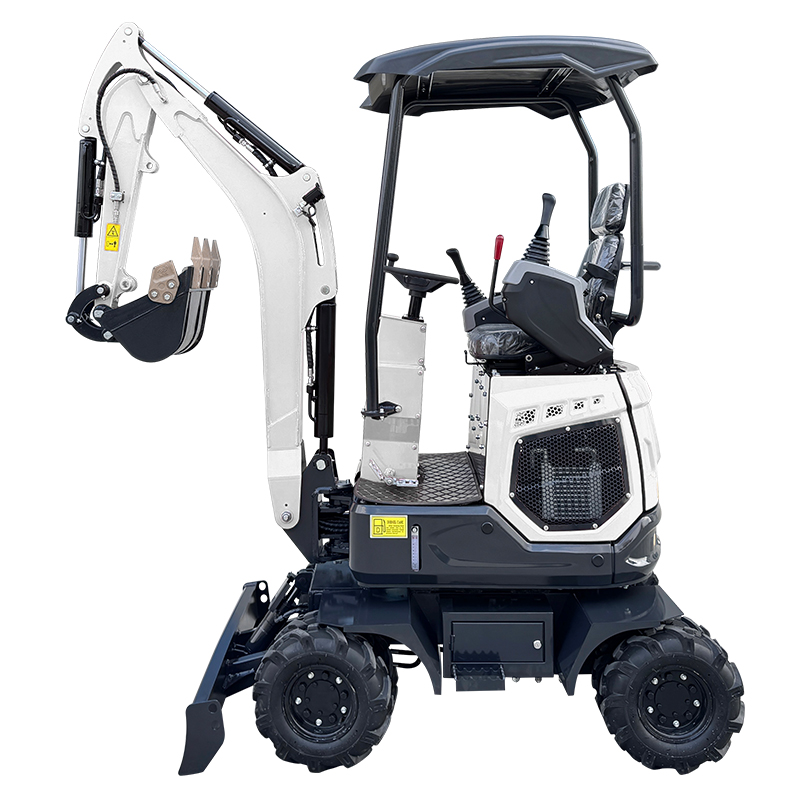
A mini excavator transforms how contractors approach home renovations—slipping through standard 36-inch gates, navigating narrow walkways, and operating in backyards or side yards where full-size machines can’t go. Its compact footprint eliminates the need for costly demolition of fences or walls just to gain entry. Low ground pressure—typically under 5 psi—protects lawns, driveways, and patios from ruts and compaction, preserving property aesthetics throughout the project.
Zero‑Tail Swing Design Enables Safe, Confined‑Space Operation Near Foundations and Fences
Zero-tail swing is a defining feature of modern mini excavators: the cab and upper structure rotate entirely within the track width, unlike conventional models whose rear overhangs during rotation. This allows operators to dig inches from house foundations, retaining walls, or privacy fences without risk of contact. On tight residential lots, this precision reduces repositioning, cuts cycle times, and prevents accidental damage. Contractors routinely use zero-tail swing models in spaces as narrow as a typical side yard—for drainage line installation, footing excavation, or basement window well digging—making them indispensable for urban and infill renovation work.
Effortless Access to Backyards, Basements, Side Yards, and Tight Urban Lots
Beyond gate access, mini excavators are engineered for real-world residential constraints. Rubber tracks distribute weight evenly to avoid sinking into soft soil or damaging paved surfaces. For basement renovations, many compact models can be lowered through a standard door or window opening and operated safely in low-headroom areas to dig sump pits or trench for utilities. In dense urban lots—where clearance between homes is minimal and staging space scarce—their small dimensions combine with sufficient breakout force to handle tough clay, gravel, or root-bound soils. The result is dramatically reduced site disruption: no demolition of existing hardscapes, no trampled gardens, and no neighbor complaints about access logistics.
Multi-Attachment Versatility Across Common Home Renovation Tasks
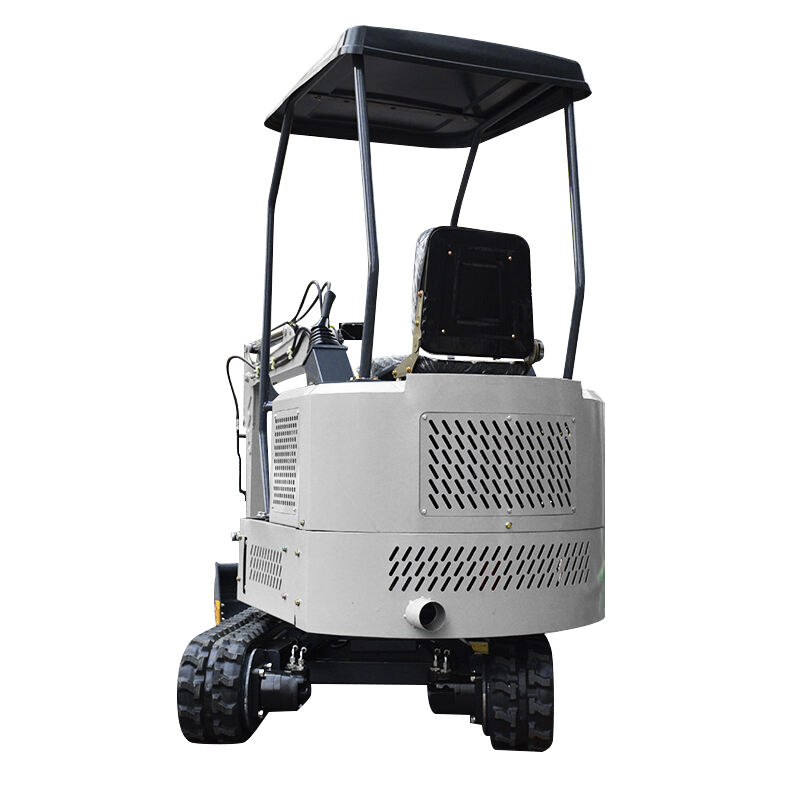
Home renovation demands variety: trenching, digging, grading, compaction, debris handling. A single mini excavator meets all these needs by swapping attachments in minutes—not hours—thanks to standardized quick-coupler systems. This eliminates the cost, coordination, and downtime associated with deploying multiple specialized machines.
Swapping Buckets, Augers, Grapples, and Compactors for Trenching, Digging, and Site Prep
Modern couplers support a full range of attachments—digging buckets with replaceable teeth, grading buckets for clean trench finishing, augers for post holes or tree planting, hydraulic grapples for debris removal or material placement, and compactors for tamping backfill around foundations. Unlike older or lower-tier models, leading compact excavators accept industry-standard coupler interfaces, ensuring compatibility with widely available attachments. This flexibility lets one machine prep a site, excavate footings, install utilities, and finish grading—reducing transport, storage, and rental overhead. Time saved per day often exceeds several hours, especially when compared to manual labor or equipment swaps requiring crane lifts or trailer deliveries.
Real-World Applications: Irrigation Installation, Pool Excavation, Footing Digging, and Tree Root Removal
Contractors rely on mini excavators for high-precision, low-impact residential tasks. Installing irrigation systems? A trenching bucket cuts narrow, straight lines across lawns without disturbing mature landscaping. Swimming pool excavation benefits from fine-depth control near property lines and obstacles. Deck or addition footings require square, consistent holes—easily achieved with bucket articulation and depth-stops. And for tree root removal, a hydraulic thumb or ripper attachment cleanly severs dense root masses while minimizing collateral soil disturbance. In each case, the combination of size, control, and attachment adaptability delivers measurable reductions in manual labor, surface damage, and project duration.
Minimized Property Impact: Precision Control and Surface Protection
Mini excavators minimize damage not through compromise—but through engineering. Sophisticated hydraulic systems deliver responsive, proportional control over bucket movement and digging force, enabling millimeter-accurate excavation around utility lines, garden beds, and building foundations. Their low ground pressure (often below 5 psi) prevents rutting on grass, cracking on pavers, or compaction on newly graded soil. Optional rubber track configurations further enhance surface protection without sacrificing traction—critical for working on finished patios, driveways, or delicate sod. This level of precision makes patio extensions, French drain installations, and foundation repairs possible without compromising surrounding hardscapes or vegetation—a key factor in homeowner satisfaction and contractor reputation.
Residential-Friendly Operation: Low Noise, Low Emissions, and Regulatory Compliance
Meeting Local Noise Ordinances and EPA Tier 4 Final Emission Standards
Mini excavators are purpose-built for neighborhood sensitivity. Operating at sound levels typically under 55 dB—well within most municipal daytime and nighttime noise ordinances—they avoid disruptions to schools, remote workers, and nearby residents. Simultaneously, EPA Tier 4 Final-compliant engines cut nitrogen oxides (NOx) and particulate matter (PM) emissions by up to 90% compared to pre-2015 models. These dual advantages aren’t incidental: advanced mufflers, optimized combustion cycles, and integrated aftertreatment systems are standard on current-generation units. For contractors, this means assured compliance—no fines, no work stoppages, no community pushback. For homeowners, it means quieter mornings, cleaner air, and alignment with evolving sustainability expectations in residential construction.
Measurable Efficiency Gains: Faster Timelines and Reduced Labor Costs
Case Evidence: 40% Time Reduction in Light Demolition and Foundation Footing Prep
Field data consistently confirms the productivity edge of mini excavators in residential settings. Contractors report up to 40% faster completion for light demolition—such as removing old decks, sheds, or concrete pads—compared to manual methods. That advantage extends to critical path tasks like footing excavation, where precise bucket control eliminates over-digging and the subsequent backfilling labor it triggers. Multi-attachment capability compounds those gains: switching from a hydraulic breaker to a grading bucket takes minutes—not hours—keeping crews moving without idle time.
These efficiencies translate directly into labor savings. Independent project analyses show an average 32% reduction in crew hours per renovation job when using compact excavators versus manual or mixed-equipment approaches.
| Task | Manual Method | Mini Excavator | Time Saved |
|---|---|---|---|
| Deck Removal | 8 hours | 4.5 hours | 43% |
| Footing Excavation | 6 hours | 3.2 hours | 47% |
| Backfill Leveling | 3 hours | 1.5 hours | 50% |
Strategically deployed during site prep and early-phase work, mini excavators improve schedule reliability—projects meet deadlines 27% more consistently and suffer fewer weather-related delays. For homeowners managing fixed renovation budgets, that predictability isn’t just convenient—it’s financially essential.
Table of Contents
- Unmatched Compactness and Maneuverability for Residential Job Sites
- Multi-Attachment Versatility Across Common Home Renovation Tasks
- Minimized Property Impact: Precision Control and Surface Protection
- Residential-Friendly Operation: Low Noise, Low Emissions, and Regulatory Compliance
- Measurable Efficiency Gains: Faster Timelines and Reduced Labor Costs