
 EN
EN
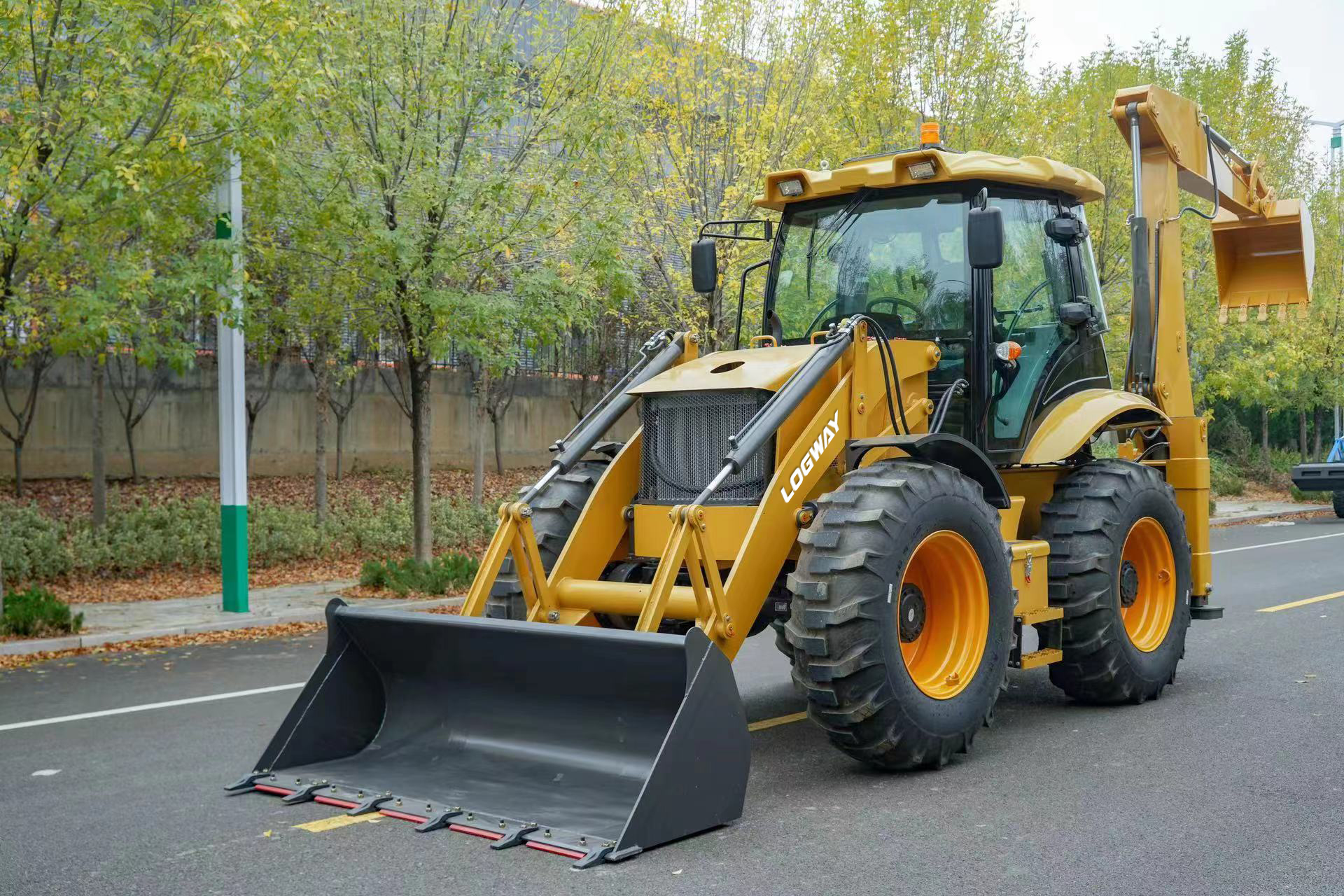
Match Loader Type to Farm Tasks, Terrain, and Soil Conditions
Why universal loader solutions fail across varied agricultural environments
Universal loaders often underperform because agriculture demands context-specific engineering—not standardized specs. Soft, muddy fields require tracked machines for stability; rocky terrain calls for reinforced undercarriages; tight orchard rows demand compact, agile models—unlike open-field operations where speed and reach dominate. A 2023 USDA survey found that 68% of farms using mismatched equipment reported productivity losses exceeding 30%. Soil composition further dictates design: clay soils benefit from wide-track crawlers to reduce compaction, while sandy loam allows optimized tire configurations. One-size-fits-all approaches ignore these interdependent variables—increasing wear, safety risks, and long-term operating costs.
The terrain–task–capacity framework for precise loader selection
Use this three-factor framework to align loader performance with real-world farm conditions:
-
Terrain adaptation:
- Flat/hard surfaces: Wheel loaders deliver optimal speed and fuel efficiency
- Sloped/uneven ground: Low-center-of-gravity models enhance stability and reduce tipping risk
- Wet or saturated soils: Wide-track crawlers minimize ground pressure (≤7 psi) to preserve soil structure
-
Task-specific capabilities:
- Hay bale handling requires high-lift height and breakout force
- Manure management benefits from quick-attach compatibility and aggressive bucket profiles
- Trenching and grading demand fine hydraulic control and consistent response latency
-
Capacity alignment:
Match bucket volume and rated lift capacity to material density—not just volume. Overloading compact units accelerates drivetrain and hydraulic component failure, while undersized machines increase cycle times by up to 40% (AgTech Journal, 2023). Always cross-reference implement weight ratings with loader lift curves at full reach—not just at the pin—since leverage dramatically reduces effective capacity.
Choose the Right Loader Size and Lifting Capacity for Your Operation Scale
Data-driven sizing: USDA 2023 trends in sub-2-ton, mid-range, and high-capacity loader adoption
Loader sizing should reflect operational scale—not aspiration. Per the USDA’s 2023 agricultural equipment survey:
- Small-scale farms (<50 acres) favor sub-2-ton loaders, used primarily for feed distribution, manure handling, and light cleanup—accounting for 62% of new purchases in this segment.
- Medium operations (50–500 acres) adopt mid-range loaders (3–6 ton capacity) for their balance of power, maneuverability, and versatility in hay bale transport, silage loading, and compost turning—representing 71% of deployments.
- Large enterprises (500+ acres) deploy high-capacity units (6+ tons) for earthmoving, bulk grain transfer, and infrastructure support—but these represent only 19% of total installations due to specialized operator training, infrastructure, and maintenance requirements.
Precise sizing avoids costly inefficiencies: undersized loaders raise fuel use and task duration by up to 40%; oversized units inflate acquisition, insurance, and maintenance costs without proportional gains in output.
Ensure Attachment Compatibility and Hydraulic Performance for Real-World Farm Work
Evaluating quick-attach standards (ISO 24410) and hydraulic specs for common attachments like hay grapples and manure forks
True efficiency emerges not from the loader alone—but from how seamlessly it integrates with attachments. Mismatched hydraulics—especially flow rate and pressure—are the leading cause of attachment underperformance, contributing to 15–20% throughput loss in field trials. ISO 24410-compliant quick-attach systems enable reliable, sub-90-second tool swaps—critical during time-sensitive windows like post-harvest manure application or emergency bale retrieval.
Three hydraulic specifications determine compatibility:
- Flow rate (GPM): Hay grapples perform optimally at ≥25 GPM; high-density manure forks require ≥35 GPM
- Operating pressure (PSI): Maintain 3,000–3,500 PSI for responsive, consistent actuation
- Coupler type: Flat-face couplers prevent leakage and contamination during repetitive, high-cycle operations
Mismatched systems accelerate seal degradation and hose fatigue—raising maintenance costs by 30% over five years. Prioritize loaders with dual independent hydraulic circuits to power attachments without compromising steering responsiveness or brake assist.
Example requirement: A 2-ton hay grapple rated for 28 GPM at 3,200 PSI will operate 40% slower—and strain hydraulic pumps—if paired with a 20-GPM system.
Attachment Compatibility Checklist
| Factor | Standard | Impact of Non-Compliance |
|---|---|---|
| Mount plate | ISO 24410 | Risk of unintended detachment |
| Hydraulic flow | Attachment spec sheet | 15–25% slower operation |
| Operating pressure | Machine manual | Seal failure + hydraulic leaks |
| Weight capacity | Loader rating plate | Structural stress + instability |
Farmonaut's analysis confirms that ISO 24410 compliance reduces attachment-related downtime by 60%. Always verify coupler alignment and flow compatibility before purchasing specialized attachments—this prevents costly retrofits when switching between pallet forks and brush grapples.
Assess Long-Term Loader Value: Serviceability, Fuel Efficiency, and Resale Considerations
A loader’s true value extends far beyond its sticker price. Evaluate lifetime economics through three pillars:
- Serviceability: Machines with modular designs, widely spaced service points, and standardized fasteners cut routine maintenance time by 20–35%. Look for swing-out radiators, ground-level fluid checks, and OEM diagnostic ports—not proprietary tools or buried filters.
- Fuel efficiency: Tier 4 Final engines deliver 15–25% lower fuel consumption than legacy models—translating to measurable savings during peak seasons (e.g., 12–16 hours/day operation). Integrated fuel-monitoring systems provide actionable data for operator coaching and fleet optimization.
- Resale value: Durability documentation (e.g., hour-meter logs, service history portals) and brand reputation strongly influence residual value. Well-maintained loaders retain 40–60% higher resale value after five years—particularly those with low-hour usage, corrosion-resistant undercarriages, and no major structural repairs.
Prioritize models offering modular diagnostics, telematics-ready architecture, and regional dealer support networks—not just headline horsepower—to maximize lifecycle ROI.
FAQs
Why do universal loaders fail in varied agricultural environments?
Universal loaders fail because they don't cater to specific farm conditions such as soil type, terrain, and the unique tasks performed on a farm. Tailored solutions ensure increased productivity and reduced wear.
What is the terrain–task–capacity framework?
This framework helps align loader performance with actual farm conditions by considering terrain adaptation, task-specific capabilities, and capacity alignment.
Why is precise loader sizing important?
Precise sizing prevents inefficiencies, as undersized loaders increase fuel consumption and task durations, while oversized ones inflate costs without commensurate output benefits.
How do attachments impact loader efficiency?
Efficiency hinges on compatibility between the loader and attachments. Incompatible hydraulics or quick-attach systems can drastically reduce throughput and raise maintenance costs.
What should I consider for long-term loader value?
Consider serviceability, fuel efficiency, and resale value. Machines with modular designs and efficient engines, alongside documented maintenance, offer better returns on investment.
Table of Contents
- Match Loader Type to Farm Tasks, Terrain, and Soil Conditions
- Choose the Right Loader Size and Lifting Capacity for Your Operation Scale
- Ensure Attachment Compatibility and Hydraulic Performance for Real-World Farm Work
- Assess Long-Term Loader Value: Serviceability, Fuel Efficiency, and Resale Considerations
- FAQs