
 EN
EN
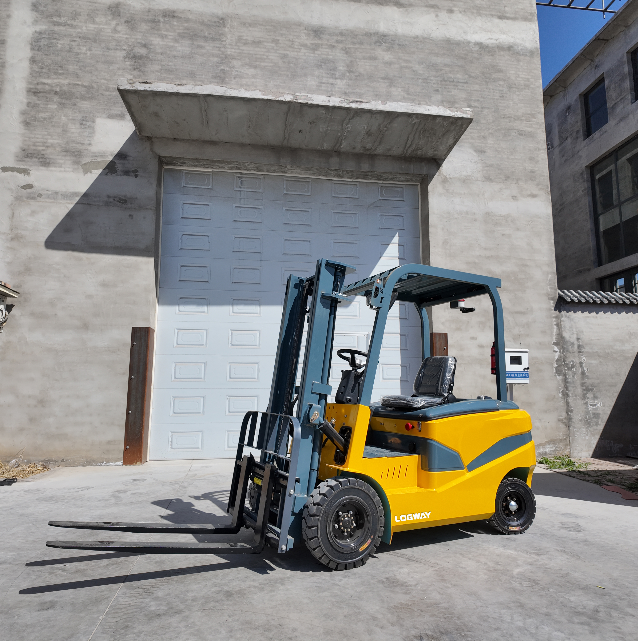
Environmental Sustainability: Zero-Emission Electric Forklifts
Improved Indoor Air Quality and Worker Safety
Electric forklifts eliminate tailpipe emissions—removing carbon monoxide, nitrogen oxides, and particulate matter from indoor environments. This directly enhances air quality and reduces respiratory health risks for warehouse workers. Their quieter operation (typically below 85 dB) minimizes noise fatigue and supports clearer communication, while lower heat output contributes to safer thermal conditions. According to the California Air Resources Board (CARB), indoor-compliant electric models accounted for 50% of new forklift sales in 2023—a trend driven by tightening occupational health regulations. Reduced exhaust exposure is linked to an 18% decrease in worker sick days, per peer-reviewed warehouse safety studies.
Compatibility with Renewable Energy and Lifecycle Emissions Advantage
Electric forklifts integrate natively with on-site solar or wind generation via smart charging systems, enabling carbon-neutral operation when powered by renewables. Lithium-ion batteries last three to four times longer than lead-acid alternatives and achieve up to 95% recyclability at end-of-life. Full lifecycle emissions analysis shows electric forklifts generate 42% less CO₂-equivalent than internal combustion (IC) units—a gap that widens as regional electricity grids decarbonize. Regenerative braking recaptures 15–30% of energy during load-lowering cycles, further improving energy efficiency.
Total Cost of Ownership: Why Electric Forklifts Deliver Long-Term Savings
Reduced Operating Costs — No Fuel, Oil, or Exhaust System Maintenance
Electric forklifts eliminate fuel costs entirely—electricity averages 50–70% less expensive than propane or diesel per operational hour. Without combustion engines, operators avoid recurring expenses like oil changes ($200+/year), spark plug replacements, and exhaust system servicing. This cuts annual maintenance costs by $6,000–$14,000 per unit versus IC models. Fewer moving parts also reduce mechanical failure rates, lowering unplanned downtime by up to 30% and extending average service life to 5–7 years.
Battery Longevity, Smart Charging, and ROI vs. IC Forklifts
Modern lithium-ion batteries deliver over 10 years of service with proper use and require only opportunity charging during operator breaks—eliminating time-consuming battery swaps. Smart charging systems optimize power draw and timing, reducing electricity costs by 15–20%. Though upfront acquisition costs run 20–30% higher than IC counterparts, electric forklifts typically reach ROI within 1–3 years. In high-usage facilities, five-year total cost of ownership (TCO) is up to 40% lower—and reduced emissions may qualify operations for federal or state green tax incentives.
Operational Performance: Productivity and Ergonomics of Electric Forklifts
Quiet, Vibration-Free Operation Enhances Communication and Operator Well-Being
By eliminating engine noise and mechanical vibration, electric forklifts support auditory clarity and reduce fatigue during extended shifts. Clearer communication lowers miscommunication-related accidents by up to 34%, per industrial safety research. Ergonomic enhancements—including spring-assisted fingertip controls and vibration-dampened operator cabins—further reduce physical strain, helping operators sustain focus and accuracy across long work cycles.
Precision Maneuverability, Consistent Torque, and Space-Efficient Design
Electric forklifts deliver instant torque for smooth, responsive acceleration—enabling millimeter-precise load placement without lag. Their compact chassis and tighter turning radii allow efficient navigation in aisles under 3 meters wide. Unlike IC models, they maintain full torque across the entire battery charge cycle, ensuring consistent lifting speed and performance. This space-efficient design increases potential storage density by 15–22% in fast-paced, high-turnover distribution centers.
FAQs
How do electric forklifts improve indoor air quality?
Electric forklifts eliminate tailpipe emissions, reducing harmful pollutants like carbon monoxide and nitrogen oxides, which improves air quality and worker respiratory health.
Are electric forklifts compatible with renewable energy sources?
Yes, electric forklifts integrate well with renewable energy systems like solar and wind through smart charging, enabling carbon-neutral operations.
What are the maintenance cost advantages of electric forklifts?
Electric forklifts have lower maintenance costs because they don’t require oil changes, spark plug replacements, or exhaust system servicing, cutting annual expenses significantly.
What is the expected lifespan of lithium-ion batteries for electric forklifts?
Modern lithium-ion batteries can last over 10 years with proper usage and require only opportunity charging, reducing downtime and cost.
How do electric forklifts enhance productivity in warehouses?
Electric forklifts offer quieter, vibration-free operation and precise maneuverability, which enhances communication, reduces fatigue, and allows efficient navigation in tight spaces.
Table of Contents
- Environmental Sustainability: Zero-Emission Electric Forklifts
- Total Cost of Ownership: Why Electric Forklifts Deliver Long-Term Savings
- Operational Performance: Productivity and Ergonomics of Electric Forklifts
-
FAQs
- How do electric forklifts improve indoor air quality?
- Are electric forklifts compatible with renewable energy sources?
- What are the maintenance cost advantages of electric forklifts?
- What is the expected lifespan of lithium-ion batteries for electric forklifts?
- How do electric forklifts enhance productivity in warehouses?