
 EN
EN
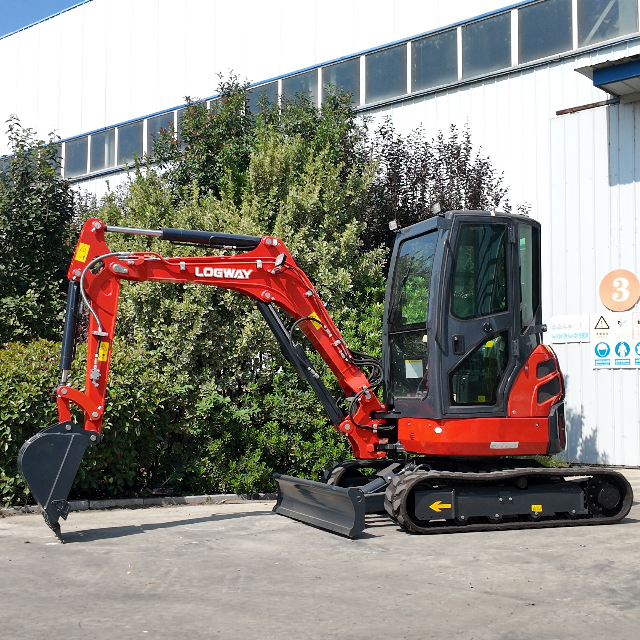
Unmatched Maneuverability in Urban and Confined Job Sites
Zero-Tail Swing and Compact Footprint Enable Safe, Efficient Operation in Tight Spaces
The defining advantage of mini excavators in urban environments stems from their zero-tail-swing design and compact dimensions. Unlike standard excavators, these machines rotate entirely within their own footprint—some as narrow as 35 inches—eliminating hazardous overhang near buildings, utilities, or pedestrians. This allows operators to work safely just inches from obstacles while maintaining full digging capacity. In congested downtown sites, the space savings are transformative: projects reduce equipment repositioning time by up to 40% and avoid costly structural protection measures required for larger machinery. The compact footprint also enables access through standard gates and alleyways where full-size equipment cannot operate—making mini excavators indispensable for inner-city renovations, utility upgrades, and basement excavations where space constraints would otherwise stall progress.
Case Study: Utility Line Retrofitting in Downtown Seattle — How Mini Excavators Cut Timeline by 37%
Seattle’s recent utility upgrade project exemplifies how mini excavators deliver strategic value in extreme urban conditions. Contractors replaced aging gas lines beneath sidewalks flanked by historic buildings and active storefronts—constraints that made conventional excavators impractical. Those machines required 20-foot work zones, which would have necessitated extended street closures. Instead, crews deployed zero-tail-swing mini excavators operating in 8-foot-wide corridors behind traffic barriers. Their compact size enabled simultaneous work at multiple points without disrupting pedestrian or vehicular flow, while precise hydraulic controls prevented damage to adjacent foundations. The project finished in 63 days—37% faster than the original 100-day schedule—and saved the city an estimated $1.2 million in reduced traffic management costs and business interruption fees.
Attachment Versatility That Maximizes Mini Excavator Productivity
Quick-Connect Hydraulic Systems: Seamless Switching Between Trenchers, Breakers, and Grapples
Modern mini excavators feature integrated quick-connect hydraulic systems (QCS) that enable tool changes—such as trenchers, breakers, and grapples—in under two minutes, with no manual pin removal required. Hydraulic integration ensures full power delivery across attachments, whether breaking concrete or lifting irregular debris. According to Equipment World (2024), 85% of contractors prioritize attachment versatility when selecting equipment, citing its direct impact on job-site agility and schedule adherence. Field studies confirm that eliminating downtime between tool changes contributes to a 34% reduction in overall project timelines.
Six High-Impact Attachments — From Pipe-Laying Buckets to Hydraulic Hammers
Mini excavators achieve unmatched adaptability through purpose-built attachments that expand their operational scope:
- Grading buckets with tilt functionality for precision landscaping
- Hydraulic hammers delivering 700–1,200 BPM for controlled demolition
- Augers drilling up to 24-inch-diameter foundation holes in constrained spaces
- Pipe-laying buckets featuring notched edges for secure utility installation
- Rakes clearing debris while protecting underground utilities
- Plate compactors preparing stable sub-surfaces for paving
A leading manufacturer’s 2024 case study found that projects utilizing four or more specialized attachments reduced manual labor costs by 22%, primarily through minimized equipment swaps and smaller crew requirements—effectively transforming a single machine into a compact, multi-role earthmoving team.
Total Cost Efficiency: Lower Fuel, Transport, Labor, and Ownership Costs
Mini excavators deliver substantial cost advantages through reduced operational expenses. Their compact design and efficient engines directly translate to measurable savings across fuel, logistics, and labor—critical factors in calculating Total Cost of Ownership (TCO) for construction fleets.
25–40% Less Fuel Use vs. Standard Excavators — Verified Field Data from Major Manufacturers (2023)
Field studies by leading equipment manufacturers confirm mini excavators consume 25–40% less fuel than full-sized counterparts performing comparable tasks. This efficiency results from optimized hydraulic systems and lower mass, requiring less energy for movement and operation. For example, a 3-ton mini excavator averages 0.8–1.2 gallons per hour versus 1.5–2.5 gallons for a 15-ton standard model. Over long-duration projects, these savings compound significantly—operators report annual fuel cost reductions exceeding $8,000 per machine.
Reduced Transport Logistics and Crew Requirements Cut Project Overhead by Up to 22%
The compact size of mini excavators eliminates the need for specialized trailers or oversize transport permits. A single flatbed truck can typically carry two units, halving delivery costs and accelerating site deployment. Additionally, intuitive controls allow operation by one-person crews instead of teams, reducing labor expenses by 15–30%. Industry reports indicate these combined efficiencies lower project overhead by 22% on average—especially impactful in urban settings, where space constraints drive up traditional equipment mobilization costs.
Precision Control for Sensitive Infrastructure Work
When working near buried utilities, historical structures, or complex underground networks, precision is non-negotiable. Modern mini excavators deliver surgical-grade accuracy through advanced control systems and GPS-guided hydraulics, enabling operators to execute high-stakes tasks within millimeter tolerances. Unlike larger equipment prone to over-excavation, these compact machines feature variable-flow hydraulics that let operators precisely modulate bucket pressure—critical when clearing debris near fiber optic lines or excavating around fragile stormwater culverts. Projects using mini excavators for sensitive infrastructure work report 40% fewer accidental utility strikes compared to manual methods, reducing service disruptions, environmental remediation expenses, and costly delays. Ergonomic joystick controls minimize fatigue-related errors during extended precise maneuvers, while integrated camera systems provide real-time visibility in blind spots near foundations. The combination of technology and compact design transforms high-risk excavation into controlled, predictable operations—minimizing liability exposure while safeguarding critical infrastructure integrity.
FAQ
What is the main advantage of using mini excavators in urban areas?
Their zero-tail-swing design and compact size allow them to operate safely in tight spaces without overhang, making them ideal for congested urban sites.
How do mini excavators save costs compared to standard excavators?
They consume 25–40% less fuel, require simpler logistics for transport, and can be operated by smaller crews, resulting in substantial cost savings.
Can mini excavators switch between attachments seamlessly?
Yes, modern mini excavators feature quick-connect hydraulic systems that allow for tool changes in under two minutes without manual pin removal.
What types of tasks can mini excavators perform with attachments?
Attachments like grading buckets, hydraulic hammers, augers, and pipe-laying buckets enable tasks such as landscaping, demolition, foundation drilling, and utility installation.
Are mini excavators suitable for sensitive infrastructure work?
Yes, their precise controls and GPS-guided systems allow for accurate operations with minimal disruption to surrounding structures and utilities.
Table of Contents
- Unmatched Maneuverability in Urban and Confined Job Sites
- Attachment Versatility That Maximizes Mini Excavator Productivity
- Total Cost Efficiency: Lower Fuel, Transport, Labor, and Ownership Costs
- Precision Control for Sensitive Infrastructure Work
-
FAQ
- What is the main advantage of using mini excavators in urban areas?
- How do mini excavators save costs compared to standard excavators?
- Can mini excavators switch between attachments seamlessly?
- What types of tasks can mini excavators perform with attachments?
- Are mini excavators suitable for sensitive infrastructure work?