
 EN
EN
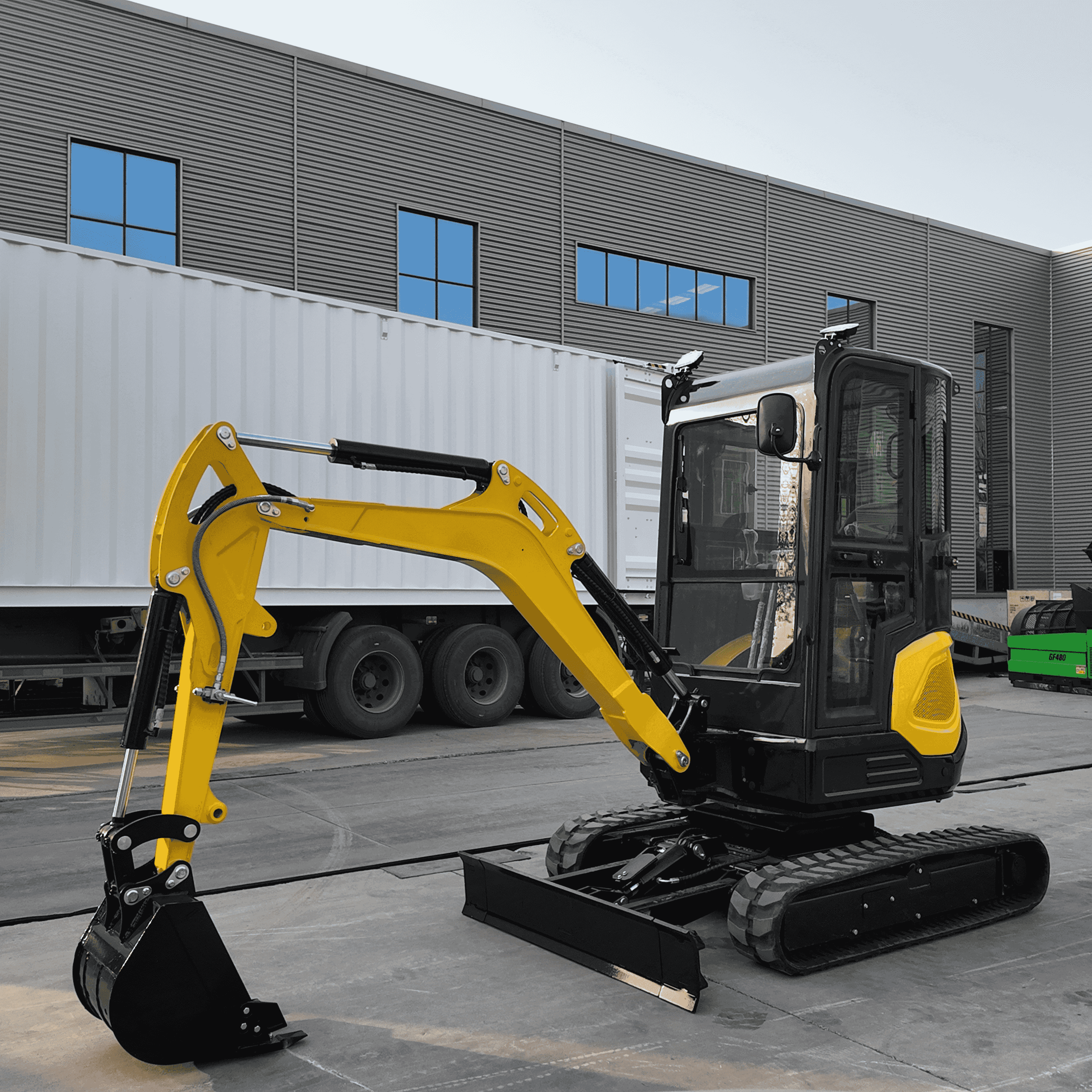
Excavating in Tight Urban and Residential Spaces
Challenges of Limited Access in Dense Construction Zones
Getting construction gear into tight urban spaces is a major headache when alleyways measure less than 2.5 meters across. Crews have to work around all sorts of hidden pipes and wires below ground level gas lines, water mains, power conduits while making sure they don't crack walls or foundations of neighboring structures. The Urban Development Institute reported last year that these kinds of problems account for nearly 30% of all delays on city building projects. And then there's the issue of old buildings in historical areas whose foundations simply can't handle the shaking from heavy machinery. Because regular digging techniques won't cut it here, contractors need to bring in special equipment and expertise just to get started on what should be routine work.
Compact Design and Zero-Tail Swing: Why 2 Ton Excavators Excel
What makes 2 ton excavators so impressive is their narrow design under 1.5 meters wide combined with those zero tail swing features. These smaller machines can actually turn around completely where they stand, which means no worrying about bumping into walls or fences during operation. The hydraulics pack quite a punch too, generating around 16 kilonewtons of force for breaking through tough materials like asphalt while still allowing fine control over the bucket movements. Operators find this really helpful because they can get super close to things without having to move the whole machine again. Sites that are tight spaces benefit a lot from this capability, often cutting down on how long excavation takes by roughly 40 percent compared to bigger equipment.
Case Study: Renovation in a Narrow City Alley
In one of those narrow medieval alleys just off La Rambla, a Barcelona infrastructure crew recently tackled the replacement of ancient sewage lines. They managed the job using a surprisingly small 2 ton excavator. What made it possible? The machine had rubber tracks that kept from crushing the historic cobblestones, plus a generous 180 degree working range that let workers dig right underneath those ornate balconies hanging over the street. Back in the day, this kind of work would have meant tearing down parts of buildings, but not this time around. The whole project wrapped up in just 11 days without so much as a crack appearing on any nearby walls. Mini excavators are proving themselves invaluable for these tight city spaces where bigger machines simply can't fit through the doorways.
Strategy: Maximizing Maneuverability in Confined Work Areas
Operators optimize tight-space efficiency through three key tactics:
- Path planning: Mapping clockwise/counter-clockwise rotations to minimize repositioning
- Attachment selection: Opting for 300mm grading buckets for precision trenching
-
Debris management: Using conveyor belts for continuous soil removal
These methods reduce idle time by 60%, while routine pressure checks on swing motors prevent hydraulic failures in cramped conditions.
Precision Trenching for Utilities and Irrigation Systems
Demand for Accurate Trenching in Suburban and Urban Developments
As suburbs keep growing and cities get retrofitted, there's a real need for super accurate trench digging when laying down those essential utility lines like water pipes, gas mains, fiber optic cables, plus all sorts of irrigation systems too. When we're dealing with crowded urban spaces where every square inch counts, contractors have to work with tiny excavation zones so they don't mess up roads, sidewalks, or other buried services already in place. Take Logway Machinery's findings from last year for instance – their data shows that smaller excavators cut down on service disruptions during city utility installations by roughly forty percent. Makes sense really, because less digging means fewer headaches for everyone involved from residents to local authorities trying to maintain daily operations.
Hydraulic Control and Depth Accuracy of 2 Ton Excavators
Modern 2-ton excavators deliver surgical precision through advanced hydraulic systems. Operators can maintain ±2 cm depth consistency even in unstable soils—critical for code-compliant utility burial depths. Zero-tail-swing models rotate within their tracks, enabling trenching within 1m of walls—impossible for larger equipment.
Case Study: Installing Underground Drainage in a Residential Community
A 2023 Seattle project used a 2-ton excavator to install 500m of drainage pipe in a 15m-wide corridor between homes. The machine’s 1.8m arm reach and 30cm bucket width allowed digging 1.5m-deep trenches without damaging gardens. Completion time dropped 30% versus manual methods.
Strategy: Using Trenching Attachments to Boost Efficiency
Specialized trenching buckets (15–30cm wide) create clean, narrow excavations requiring 50% less backfill. For rocky terrain, hydraulic breakers pre-fracture ground before digging. Operators report 25% faster cycle times when combining laser-guided grading systems with tilt-rotator attachments for precise slope control.
Landscaping and Backyard Transformations
Growing Demand for Outdoor Living and Garden Redesign
Homeowners increasingly invest in outdoor living spaces, with 68% prioritizing backyard upgrades for entertainment and relaxation (2024 Residential Landscaping Survey). This surge drives demand for garden redesigns addressing uneven terrain, overgrowth, and functional zoning—projects where a 2 ton excavator delivers disproportionate value relative to its size.
Minimal Disruption and Precision Work with a 2 Ton Excavator
Unlike larger equipment, compact excavators minimize turf damage and collateral disturbance. Their zero-tail-swing design allows rotation within inches of fences or structures, while hydraulic systems enable surgical-grade accuracy for:
- Delicate root ball excavation
- Contour grading within 0.5° tolerance
- Trenching for irrigation within 1cm precision
Case Study: Pool Excavation and Hardscaping in a Compact Yard
A 0.2-acre property required a 6m×3m pool installation amidst mature trees. The 2 ton excavator:
- Excavated 45m³ of soil within 3.5m clearance constraints
- Preserved root systems within 30cm of excavation zones
- Graded the surrounding area for stone pavers in under 8 hours
This reduced project timeline by 40% compared to manual labor.
Strategy: Multi-Functional Attachments for Grading and Digging
Maximize ROI by pairing the base machine with quick-change attachments:
| Attachment | Functionality Boost | Efficiency Gain |
|---|---|---|
| 24" Grading Bucket | Leveling soil for patios/planters | 3× faster than manual |
| Hydraulic Auger | Drilling 30cm-diameter fence post holes | 12 holes/hour |
| Tiltrotator Coupler | 45° bucket articulation for slope work | Eliminates repositioning |
Small-Scale Demolition and Indoor Renovation Projects
Demolition Needs in Residential Retrofits and Confined Spaces
Residential remodels often require selective demolition in tight quarters where traditional equipment can't operate. Interior wall removal, foundation modifications, and basement expansions demand machinery with both power and compact dimensions to navigate doorways and staircases while minimizing structural impact.
High Breakout Force in a Lightweight 2 Ton Excavator Frame
Modern compact excavators deliver exceptional hydraulic performance in confined environments. Units in this class generate up to 10,000 lbf breakout force—enabling efficient concrete slab fragmentation and material removal despite dimensional constraints. This power-to-size ratio prevents the common trade-off between maneuverability and capability.
Case Study: Basement Remodel with Limited Entry Access
A recent renovation project highlights this equipment's versatility:
- Challenge: 32-inch-wide staircase access to basement
- Solution: 2 ton excavator disassembled/reassembled onsite
-
Result: Completed structural demo 40% faster than manual labor
The reduced debris handling time accelerated the overall project timeline while minimizing disruption to the occupied upper floors.
Balancing Safety and Efficiency in Indoor Demolition
Operators prioritize ventilation control and dust suppression when working indoors. Key safety protocols include:
- Continuous air quality monitoring
- Using water-mist attachments for particulate suppression
- Installing temporary structural braces before load-bearing wall removal
These measures maintain OSHA-compliant environments while leveraging the precision grading capabilities of compact excavators to prepare surfaces for rebuild phases.
Grading and Site Preparation on Uneven Terrain
Challenges of Preparing Sloped or Irregular Residential Lots
Working on sloped or uneven land for homes brings all sorts of headaches when it comes to keeping erosion at bay, managing where water goes, and making sure the ground stays stable underneath everything. When the slope gets really steep, water just runs off too fast, which means careful shaping of the land is needed so it doesn't pool around house foundations. Some studies in terrain engineering suggest that hillsides with unstable soil are about 15-20% more likely to slide down during heavy rains than regular flat ground. Because of these challenges, contractors need special machinery that can grip properly while doing the fine work of leveling out the earth without causing further damage.
Fine Grading with Adjustable Bucket Control
Today's 2 ton excavators really shine because of their hydraulic systems that let operators adjust buckets down to the millimeter level. When working on site, these machines make it possible to switch back and forth between heavy digging tasks and delicate surface work without missing a beat. For jobs like shaping building foundations or creating proper drainage channels where getting within 2 centimeters matters a lot, this kind of control makes all the difference. What we've noticed is that having such precise movement cuts down on the need for hand corrections later on, which means projects tend to wrap up faster overall. Some contractors report cutting time spent on certain tasks by around 30%, though results will vary depending on the specific job conditions.
Case Study: Building Pad Preparation on a Hillside Lot
There was this coastal construction job where they needed to create a flat foundation for a building sitting on a pretty steep 35 degree slope. The contractors brought in a small excavator fitted with those special tiltrotator attachments which allowed them to do all sorts of digging and filling work right there in the limited space available. They used the machine's built in monitoring system to keep track of grades as they went along, making sure everything stayed level properly. What made this method stand out was how much less damage it did to the surrounding soil - around 40 percent less disturbance than older methods typically cause. Plus, the whole earthmoving process took only three days rather than the usual seven when using conventional machinery.
Strategy: Integrating Laser-Guided Tools for Precision Grading
Laser guided grading systems work hand in hand with excavator hydraulics to keep things level while digging. Combine these with GPS based grade control and suddenly operators are hitting targets within millimeters even on tricky terrain. The real money saver comes when working close to property lines. Just a 5 centimeter error there means expensive fixes down the road. Contractors who have adopted this tech tell us they get around 98 percent right the first time when setting those slopes according to engineering specs. That kind of precision cuts down on rework and keeps projects moving forward without unnecessary delays.
FAQ
What is a zero-tail-swing excavator?
A zero-tail-swing excavator is a compact machine designed to rotate within its track width, allowing operators to work in tight spaces without risking damage to surrounding structures.
How do 2-ton excavators improve precision in trenching?
2-ton excavators use advanced hydraulic systems to achieve ±2 cm depth accuracy, making them ideal for trenching in crowded urban environments.
Why are 2-ton excavators preferred for landscaping projects?
Due to their compact size and precise control, 2-ton excavators minimize damage to existing landscapes and allow for delicate excavation tasks like root ball removal and contour grading.
Can a 2-ton excavator handle demolition projects?
Yes, with high breakout force and compact dimensions, 2-ton excavators are effective for selective demolition needs in residential spaces, especially indoors.
What benefits do laser-guided tools offer in excavation?
Laser-guided tools align with hydraulic systems to ensure precise grading and slope control, reducing rework and optimizing project timelines.