
 EN
EN
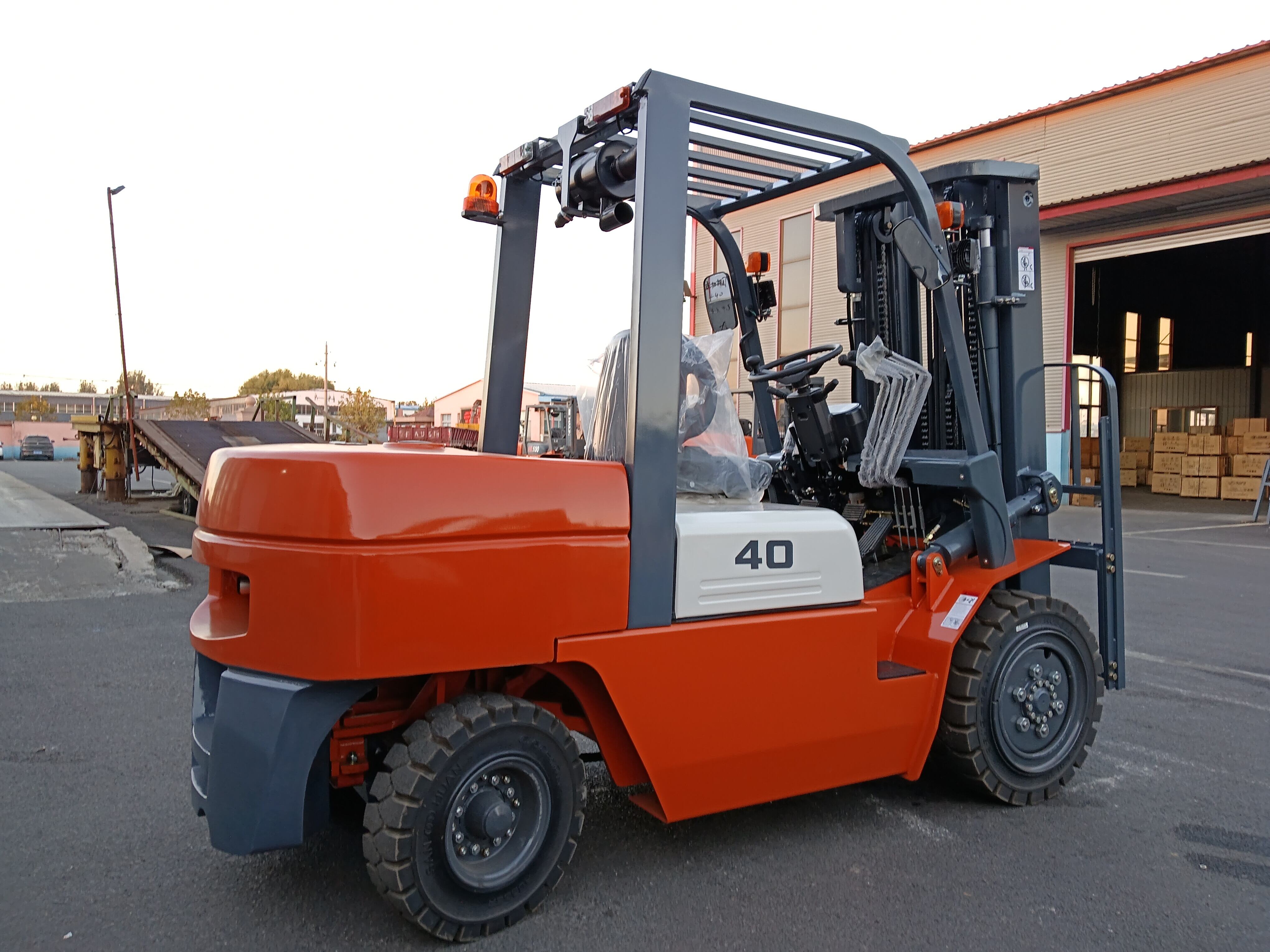
Class IV–V Diesel Forklifts: The Standard for High-Capacity Warehouse Bulk Handling
Why Class IV and Class V Diesel Forklifts Dominate Bulk Cargo Workflows
When it comes to moving large volumes of materials around warehouses, Class IV (cushion tire) and Class V (pneumatic tire) diesel forklifts are tough customers. These machines have beefed up frames and powerful engines that crank out between 74 to 130 kW of power. They can handle lifting anything from 5 tons right up to 16 tons continuously in those tough warehouse conditions where electric forklifts tend to break down when faced with really heavy loads. The cushion tires found on Class IV models work great on smooth concrete floors at loading docks, whereas the pneumatic tires on Class V trucks perform better in those tricky spots where warehouses meet outside storage areas. Most operators prefer diesel because these trucks can be quickly refilled without long waits, keeping operations running smoothly. According to recent data from Logway Machinery in their 2024 report, nearly 8 out of 10 metal fabricators still stick with diesel powered equipment for their heavy lifting needs despite all the talk about going green.
Load Capacity Spectrum: 5–16 Ton Diesel Forklifts in High-Density Warehousing
High-density warehousing demands precise capacity matching:
- 5–8 ton models maneuver palletized goods in narrow aisles
- 10–12 ton units handle steel coils or industrial machinery
- 15–16 ton behemoths transport shipping containers and bulk raw materials
The power packed into diesel engines lets these machines handle heavy loads without dragging around all that extra weight from big batteries, which keeps things balanced and stable when lifting stuff. Electric forklifts usually top out somewhere between 6 and 7 tons, while those old school internal combustion diesel models can actually manage about 40% more weight at their peak. Makes a real difference on job sites like lumber yards or metal foundries where getting materials moved quickly matters a lot. And don't even get me started on those busy warehouses running multiple shifts through the day - nobody wants to compromise on how much they can carry or risk damaging cargo just because equipment isn't up to snuff.
Performance Essentials: Power, Traction, and Terrain Adaptability for Diesel Forklifts
Engine output vs. lifting efficiency: How 74–130 kW diesel power enables sustained 12+ ton lifts
Diesel forklifts pack a real punch when it comes to torque output, often hitting three times what electric models can manage. This makes them ideal for those jobs that involve lifting heavy loads over and over again. Most diesel engines fall somewhere between 74 and 130 kW, which keeps the hydraulics responsive even when dealing with those 12 ton plus lifts that happen all day long. Workers report cutting down on cycle times by around 30% or so when they're moving things like steel coils across the warehouse floor. The cooling systems on these machines are pretty impressive too, letting operators work through full shifts without overheating issues. And because the power delivery stays steady throughout operation, there's much less chance of stalling mid-lift. For facilities that handle large volumes of material constantly, this kind of reliable performance matters way more than having occasional bursts of maximum power.
Concrete docks vs. uneven surfaces: Traction systems and stability features in diesel forklifts
Transitioning between warehouse docks and outdoor yards demands adaptive traction. On smooth concrete, standard tread tires provide adequate grip; however, gravel, packed earth, or sloped surfaces require four-wheel drive (4WD) systems that dynamically distribute torque to prevent wheel slippage. Complementing traction, integrated stability technologies include:
- Dynamic counterweights that auto-adjust during load shifts
- Tilt sensors triggering audible/visual alerts at inclines ±10°
- Anti-roll bars reducing lateral sway by 40% on 15° gradients
Together, these features preserve load integrity and operator confidence across mixed-surface workflows—particularly during cross-docking, where tip-over risk escalates without real-time stability intervention.
Operational Fit: Matching Diesel Forklift Specifications to Real-World Warehouse Constraints
Three critical alignment checks: Capacity envelope, aisle width, and payload center of gravity
When picking out a diesel forklift for moving bulk cargo around, there are really three main things worth checking first. Let's start with capacity. Don't just look at what the specs say about maximum load weight. What matters more is how much capacity actually drops off when lifting items further away from the truck itself. Many folks get caught by surprise here, which explains why so many stability problems happen when lifting over 10 tons. Next up is aisle space requirements. Diesel powered machines generally need about 12 to 13 feet of room to turn around properly. That's significantly more than the 8 to 10 feet needed for smaller electric models. Facilities need to make sure their warehouse layout can accommodate this difference. Finally, take a good look at where the weight sits on different loads. Irregular shapes like pipe coils or heavy machinery create all sorts of balance challenges. The way these weights shift affects whether the forklift will tip over or not. According to OSHA data from 2023, misaligned loads account for roughly 74% of all tipping accidents related to improper loading techniques. This makes sense for any facility dealing with pallets of steel, concrete slabs, or other oversized materials. Taking time to validate these factors before putting a new forklift into service saves headaches down the road.
Indoor-adjacent use: Evaluating Tier 4 Final diesel forklifts for dock-to-warehouse transition zones
Tier 4 Final diesel forklifts balance emissions regulations with solid power output, which makes them workable options for those semi-enclosed areas such as covered loading docks next to warehouses. The new exhaust treatment tech really cuts down on particulates too, knocking out about 90% compared to older models before Tier 4 came along. This helps keep the air cleaner inside without making the machines weaker or slower. There are still some limitations though. Warehouses need at least 14 feet of headroom for proper air circulation, plus they should leave between 15 to 20 feet clear space around loading doors so exhaust doesn't get trapped. If facilities don't maintain good ventilation, it can actually cost them anywhere from 18% to 25% extra each year. So just buying Tier 4 compliant equipment isn't enough either. Proper facility layout matters just as much. When everything works together right, these forklifts handle busy transfer zones effectively while staying within the indoor air quality limits set forth by the EPA's Tier 4 Final Standards document.
FAQ
What distinguishes Class IV from Class V diesel forklifts?
Class IV diesel forklifts have cushion tires suited for smooth floor surfaces like those at loading docks, whereas Class V forklifts have pneumatic tires which are better for transitioning to outdoor storage areas.
Why do many warehouses prefer diesel forklifts over electric forklifts?
Diesel forklifts are favored because they offer a higher load capacity and can be quickly refueled without long waits, which ensures continuous operation.
What are the benefits of using Tier 4 Final diesel forklifts?
Tier 4 Final diesel forklifts are designed to comply with emissions regulations, reducing particulates by around 90% compared to older models while maintaining a reliable power output.
What is critical to consider when choosing a diesel forklift for a warehouse?
When selecting a diesel forklift, consider the capacity envelope, the aisle width necessary for maneuvering, and the payload’s center of gravity to prevent accidents and maintain efficiency.