
 EN
EN
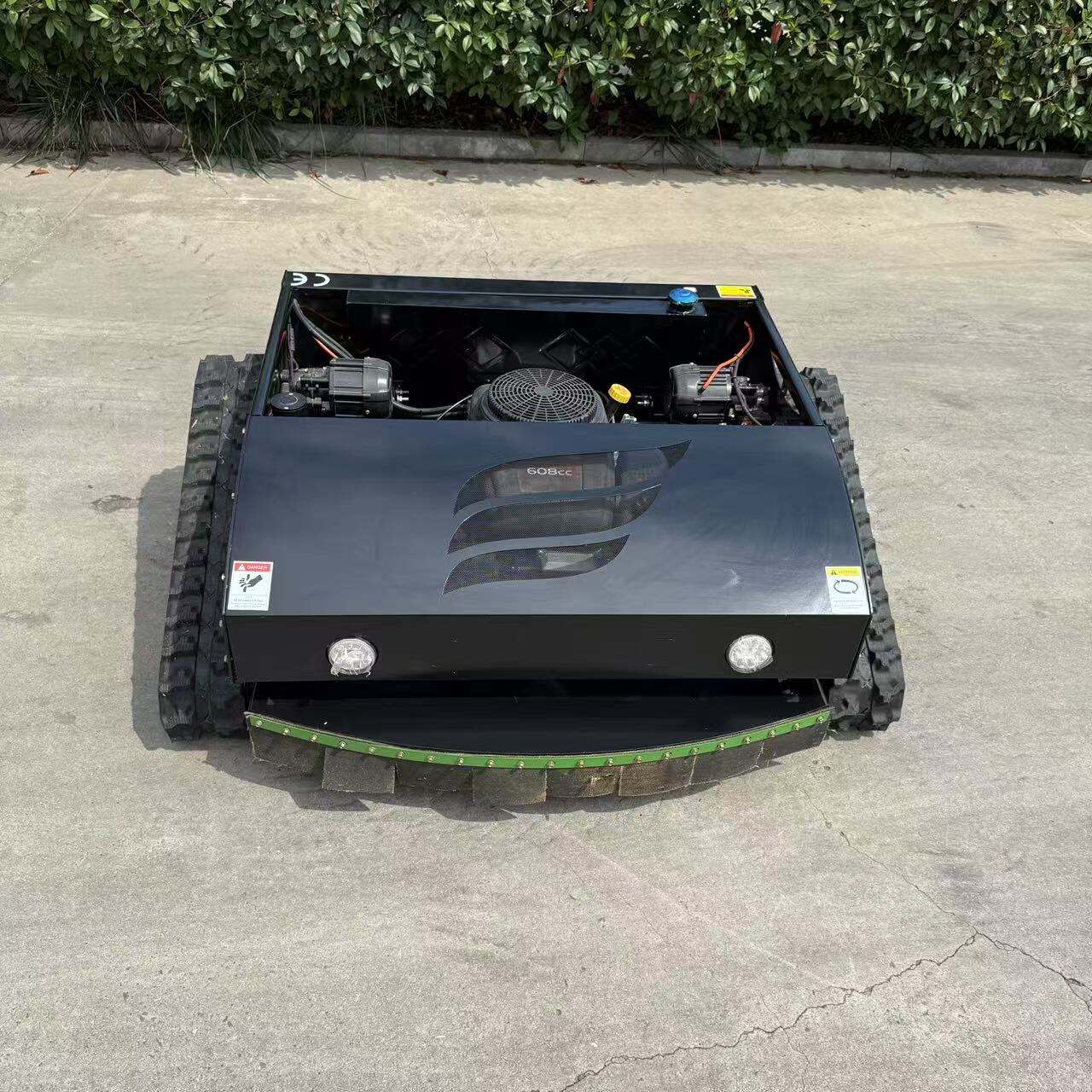
Zero-Turn Lawn Mowers: Precision and Speed for Large Properties
How Hydrostatic Drive Enables 360° Pivot Control
What makes zero turn mowers so nimble? They rely on hydrostatic drive systems with individual hydraulic pumps for each rear wheel. Operators can send one wheel forward while the other stays put, or even reverse directions completely. This lets the mower spin around in place like magic. Traditional mowers have all sorts of complicated parts connecting the steering to the wheels, but these bad boys skip all that stuff. Instead, moving those levers just changes how much fluid pressure gets sent to each wheel. For folks cutting big yards full of trees, gardens, patios, and other obstacles, this level of control means fewer awkward U-turns and no more missed spots between shrubs. Just a quick heads up though - don't try going up hills steeper than about 15 degrees. Even though these mowers dance across flat ground like nobody's business, their spinning ability actually works against them when climbing slopes because they lose grip pretty fast.
Real-World Performance: Zero-Turn Efficiency on 2+ Acre Mixed-Terrain Lawns
For properties of 2 acres or more, zero-turn mowers deliver measurable time savings. Their 42–72" cutting decks reduce overlapping passes by 30–45% versus conventional riding mowers, while operating speeds of 7–10 mph significantly compress mowing duration. Field testing across mixed terrain shows:
| Terrain Type | Time Savings | Notes |
|---|---|---|
| Flat Open Areas | 40–50% | Optimal speed and deck utilization |
| Gentle Slopes | 20–30% | Requires controlled descent |
| Obstacle-Dense Zones | 35–45% | Precision turning delivers strongest advantage |
While productivity gains are substantial, cut quality and safety demand speed moderation on rough or steep sections. Commercial landscapers report up to 40% faster completion on 5-acre properties compared to traditional riding mowers—especially when equipped with reinforced decks and high-duty spindles.
Riding Lawn Mowers and Lawn Tractors: Balanced Power for Mid-Scale Acreage
Transmission Comparison: Gear-Drive Reliability vs. Hydrostatic Responsiveness on Slopes
When it comes to choosing a transmission for properties ranging from 1 to 5 acres with uneven ground, the decision really matters. Gear drive systems are pretty straightforward mechanically and tend to cost less to maintain over time, so they work great on mostly flat land or areas with gentle hills. The gears engage directly which means power gets transferred consistently throughout operation. Industry studies show these components last about 30 percent longer compared to hydraulic options when handling similar workloads. But watch out on steep slopes exceeding 15 degrees. At those angles, gear driven machines start losing their effectiveness and could even pose safety risks. Shifting becomes problematic there, cutting down actual mowing performance by nearly half according to field observations.
Hydrostatic transmissions get rid of those annoying manual shifts because they use fluid to deliver power instead. This setup lets machines adjust speed instantly and accurately, which really matters when working on hills or rough patches of land. When going uphill, operators can keep their blades spinning at just the right RPM while traditional gear systems tend to slip and struggle for grip. Of course there are some downsides worth mentioning too. These transmissions usually cost around 15 to 20 percent more upfront than standard ones, plus they need regular maintenance like changing hydraulic fluids approximately every 300 hours of operation. But for folks dealing with lots of slopes and bumps in their landscape, most find that these extra costs make sense in the long run since they cut down mowing time significantly on tricky terrain sometimes by as much as a quarter.
Commercial-Grade Lawn Mowers: Durability and Throughput for Professional-Scale Maintenance
Professional landscapers managing estates, municipal parks, or multi-property routes rely on commercial-grade mowers built for relentless daily use. These machines prioritize structural integrity, cutting throughput, and serviceability—not just raw power—to minimize downtime and maximize ROI.
Stand-On vs. Walk-Behind Commercial Mowers: Operator Fatigue and Daily Coverage Trade-Offs
Operators find stand-on mowers much easier on their bodies during long workdays, which means landscaping teams can actually get through about 15 to maybe even 20 percent more ground each day compared to those pushing walk-behind machines, landscape research suggests. However, when it comes to really steep hills over 20 degrees angle, walk-behind units still hold their own because they just grip better and stay stable thanks to how they distribute weight across the ground. Choosing between these options really depends on what kind of terrain needs cutting versus how much area needs to be covered in a given timeframe. Some companies stick with one type for specific jobs while others switch based on daily requirements.
Critical Durability Indicators: Frame Gauge, Spindle Life, and Reinforced Deck Construction
How long commercial mowers last really comes down to three main factors in their design. First, frames made with at least 10 gauge steel hold up much better against twisting forces when they're used heavily day after day. Then there are those industrial grade spindles that can handle over 2,000 hours of operation before bearings start failing prematurely. And finally, decks that have been reinforced with welded baffles tend to survive all the constant pounding and shaking that happens during regular operation. Machines that don't meet these standards end up costing about 42 percent more each year just for repairs according to Landscape Management Index data from last year. The focus on building durable equipment makes sense given where the market is heading. Industry forecasts show the commercial lawn mower sector growing to nearly $39.4 billion by 2031 as reported by The Insight Partners in their latest analysis.
Key Lawn Mower Selection Criteria for Large Gardens
Selecting the right mower for extensive grounds requires evaluating five interdependent factors beyond deck width:
- Topography: Slopes over 15° demand enhanced traction systems—hydrostatic or all-wheel-drive—to prevent slippage; irregular boundaries benefit most from zero-turn agility.
- Deck & Component Durability: Reinforced steel decks and hardened spindles are non-negotiable for rough or heavily used terrain—they directly extend service life and reduce unscheduled repairs.
- Power Source: Modern battery-electric systems now match gas engine endurance for properties up to 2 acres, cutting emissions by 78% (2025 Landscape Efficiency Study).
- Operator Ergonomics: Adjustable seating, intuitive controls, and vibration-dampening features meaningfully reduce fatigue during multi-hour sessions—especially important for crew retention and consistency.
- Maintenance Alignment: Properties over 3 acres require 50% more frequent blade sharpening and fluid changes than smaller lawns; choose models with accessible service points and documented service intervals that match your usage intensity.
FAQs
What is the advantage of a zero-turn mower on large properties?
Zero-turn mowers offer precision and time-saving benefits. They have the capability to spin in place, allowing for efficient maneuvering around obstacles and less overlap, leading to less time spent mowing large areas.
How does a hydrostatic drive assist in mowing?
The hydrostatic drive system, using individual hydraulic pumps for each rear wheel, enables smooth forward, backward, and in-place turning, offering greater control over the mower, particularly in complex terrains.
Are hydrostatic transmissions worth the extra cost?
Hydrostatic transmissions are costlier upfront but offer flexibility in speed and handling, especially on uneven terrains, leading to reduced mowing time and potentially greater long-term savings on larger properties.
What should I consider when choosing a commercial-grade mower?
Consider durability indicators like frame gauge, spindle life, and reinforced deck construction, as these factors contribute significantly to a mower's longevity and performance, especially under heavy daily use.